Wednesday, November 14, 2012


Tuesday, November 13, 2012
Violence, Beauty, Hope: Imran Qureshi is Deutsche Bank's “Artist of the Year” 2013
Courtesy: Art Mag.
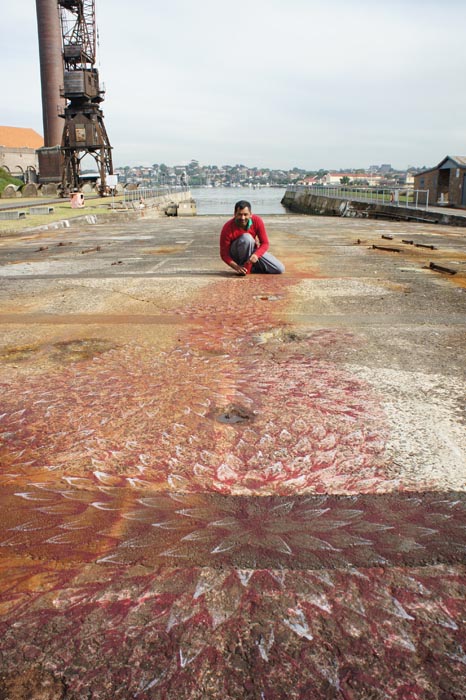
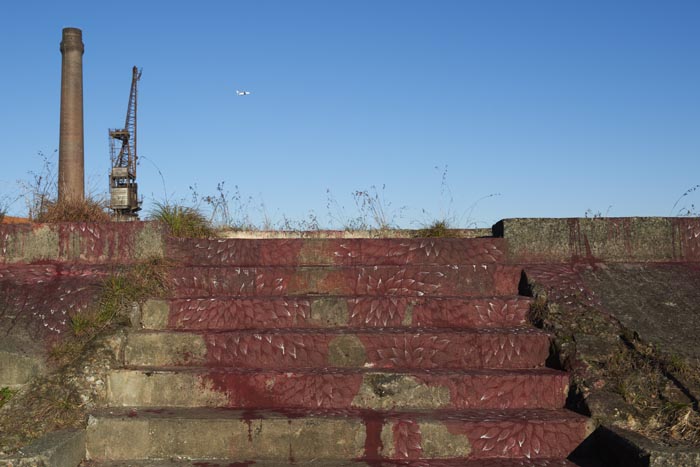
He’s considered one of Pakistan’s most important artists. Imran Qureshi will be presented in spring of 2013 with a large solo exhibition at the “Deutsche Bank KunstHalle”. The KunstHalle will also open with this show. Oliver Koerner von Gustorf on Qureshi’s unique work, which has radically renewed the centuries-old tradition of miniature painting while addressing highly relevant social themes.
Courtesy: Art Mag.
He’s considered one of Pakistan’s most important artists. Imran Qureshi will be presented in spring of 2013 with a large solo exhibition at the “Deutsche Bank KunstHalle”. The KunstHalle will also open with this show. Oliver Koerner von Gustorf on Qureshi’s unique work, which has radically renewed the centuries-old tradition of miniature painting while addressing highly relevant social themes.
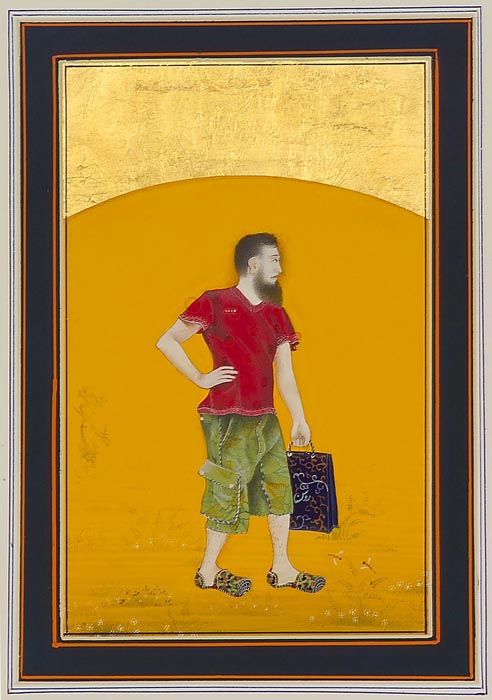
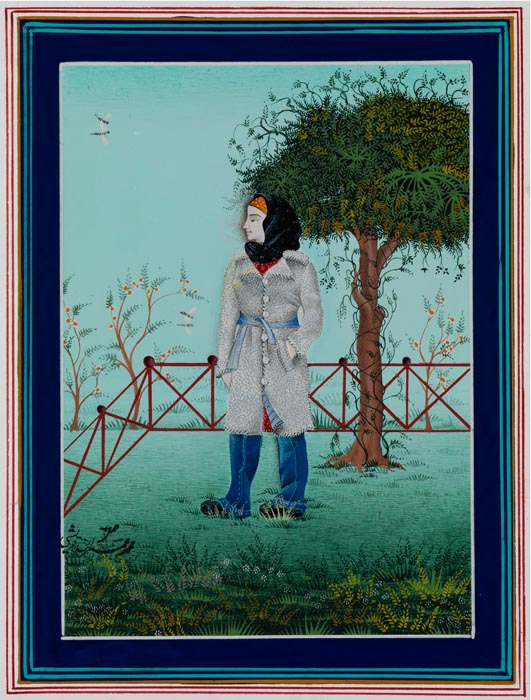
| Like beads strung on invisible threads, rain falls in precise lines from golden-hued clouds which part to reveal a patch of deep blue sky: Moderate Enlightenment, Imran Qureshi’sseries of miniature paintings made between 2006 and 2009, presents an infinitely detailed, wondrous world. Everything in it seems delicate to the point of fragility—the blades of grass poking out of the earth, the ornamental branches and vines of the bushes and trees that intertwine to create frames and patterns. The young men and women in this microcosm also seem tender and introverted, dreamily blowing soap bubbles and flower petals into the air, opening their umbrellas, or taking walks, immersed in their solitude. Their style of clothing indicates that they are of the Muslim faith. The watercolor scenes seem so light and carefree that they have to be contained in gold leaf and ornamentation in order not to fly away. A lost paradise, one might say; a look at the spiritual unity of man and nature, a traditional, comprehensible world in which everything is intact and in its place. But this nostalgic sentiment is far too simple, as becomes clear at second glance. Qureshi counters the initial impression of the sublime and near-antiquity with the insignia of a global leisure culture: his protagonists carry messenger bags, wear cargo shorts and camouflage T-shirts. The practical military look is a clear fashion statement. In combination with religion and spirituality, however, it quickly brings fanaticism to mind. Taking these “modern” signs into consideration when looking at Qureshi’s paintings, they are no longer as formally clear. Abstraction lies hidden beneath the ornament. The gold, which quickly evokes associations to religion, could also be the gold that western artists like Yves Klein, James Lee Byars, and Andy Warhol brought back into vogue in the second half of the 20th century. ... read more | ||||||||||||||||||||||



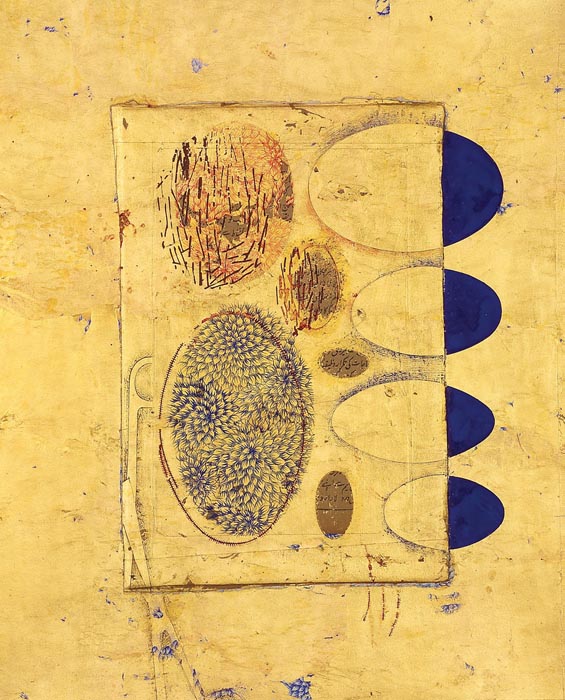

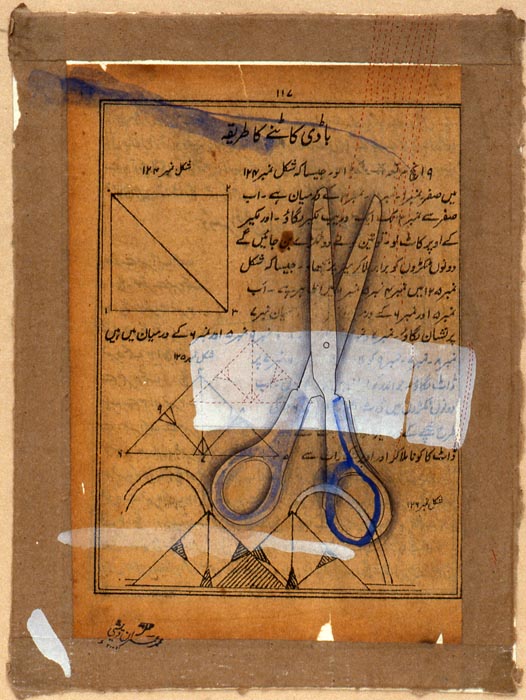
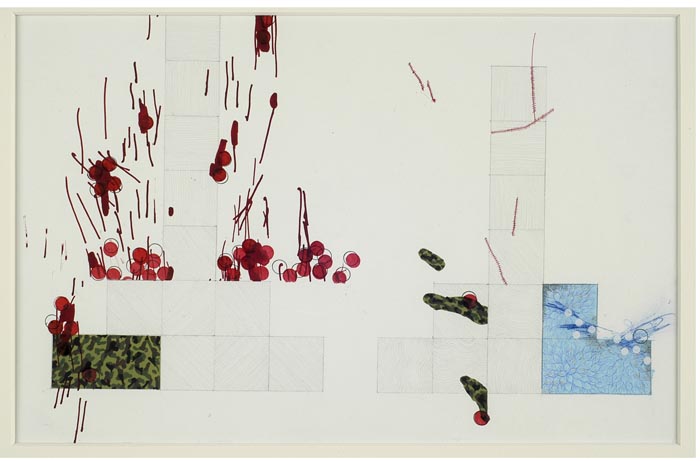
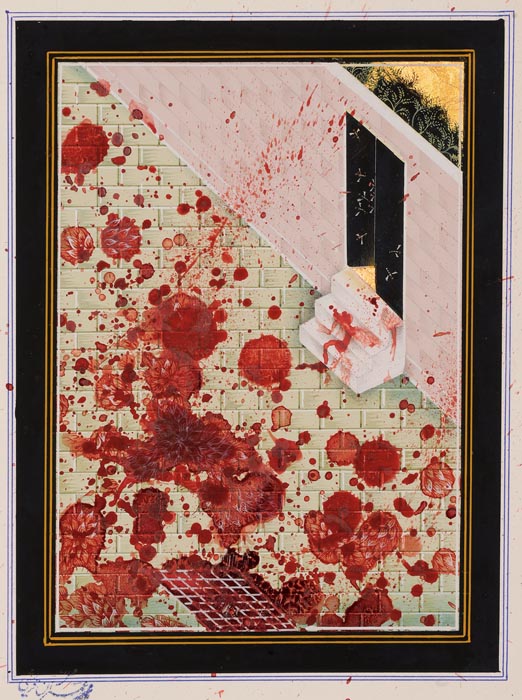
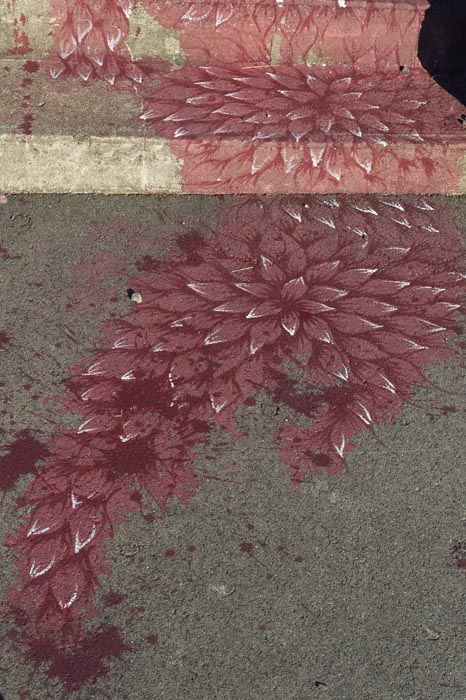
Imran Qureshi - in Berlin - Spring 2013
..... read more

Monday, November 12, 2012
Imran Qureshi - “Artist of the Year” 2013 at Deutsche Bank KunstHalle
CONGRATULATIONS to Imran Qureshi on becoming not only the first Pakistani but also the first Asian artist selected for this prestigious award. Way to go Imran Qureshi !!!!

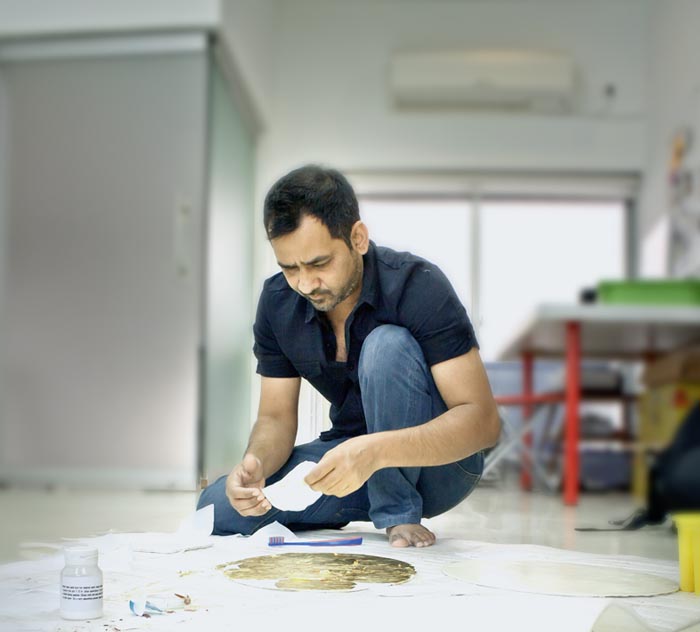
Imran Qureshi in his studio. Photo: Hassam Rana. © Hassam Rana.
Imran Qureshi is Deutsche Bank’s “Artist of the Year” 2013. A focus on young art: like its corporate collection, Deutsche Bank’s award, the “Artist of the Year”, is committed to the present. The aim is to acquaint a wide public with new and exciting artistic positions. Based on a recommendation of the Deutsche Bank Global Art Advisory Council, which includes internationally renowned curators Okwui Enwezor, Hou Hanru, Udo Kittelmann, and Victoria Noorthoorn, the bank honors an auspicious artist who addresses social issues in an individual way and has created an outstanding oeuvre that concentrates on the two focal points of the Deutsche Bank Collection: works on paper and photography. The selection was announced in Berlin, where Qureshi’s works will be shown in a major solo presentation at the Deutsche Bank KunstHalle in spring 2013.
Following the end of its 15-year collaboration with the Solomon R. Guggenheim Foundation, the Deutsche Bank KunstHalle continues to develop the original format of the space together with various different cooperation partners to introduce new international positions that have not previously been offered a platform in Berlin. The Deutsche Bank Collection will be also be present in thematic exhibitions.
Following Wangechi Mutu in 2010, Yto Barrada in 2011, and Roman Ondák in 2012, the Deutsche Bank Global Art Advisory Council chose Imran Qureshi as one of the most important figures on Pakistan’s art scene today. Trained in miniature painting, the 1972-born artist works from the motifs, symbolism, and ornaments of the Moghul tradition that flourished in the 16th and 17th centuries in the north of the Indian subcontinent. Qureshi utilizes old Islamic forms of art and expands them to become a contemporary means of expression, combining traditional motifs and techniques with conceptual thought and contemporary abstract painting in unique ways. Qureshi includes his own observations on the reality of today’s Pakistan into his work—reflections on the relationship between the West and the Islamic world.
In Qureshi’s work, an investigation into ornamentation is both a reference to tradition and a vehicle for criticism: of constricting role models, violent political and religious systems, stereotypes, and conventions. He also transposes the form of miniature painting into site-specific installations in architectural space, addressing both the building itself and its historical and political connotations. His art delves into the constant alternation between violence and hope, destruction and creation, and calls for peaceful resistance and optimism in difficult times.

Following the end of its 15-year collaboration with the Solomon R. Guggenheim Foundation, the Deutsche Bank KunstHalle continues to develop the original format of the space together with various different cooperation partners to introduce new international positions that have not previously been offered a platform in Berlin. The Deutsche Bank Collection will be also be present in thematic exhibitions.
Following Wangechi Mutu in 2010, Yto Barrada in 2011, and Roman Ondák in 2012, the Deutsche Bank Global Art Advisory Council chose Imran Qureshi as one of the most important figures on Pakistan’s art scene today. Trained in miniature painting, the 1972-born artist works from the motifs, symbolism, and ornaments of the Moghul tradition that flourished in the 16th and 17th centuries in the north of the Indian subcontinent. Qureshi utilizes old Islamic forms of art and expands them to become a contemporary means of expression, combining traditional motifs and techniques with conceptual thought and contemporary abstract painting in unique ways. Qureshi includes his own observations on the reality of today’s Pakistan into his work—reflections on the relationship between the West and the Islamic world.
In Qureshi’s work, an investigation into ornamentation is both a reference to tradition and a vehicle for criticism: of constricting role models, violent political and religious systems, stereotypes, and conventions. He also transposes the form of miniature painting into site-specific installations in architectural space, addressing both the building itself and its historical and political connotations. His art delves into the constant alternation between violence and hope, destruction and creation, and calls for peaceful resistance and optimism in difficult times.
Saturday, November 10, 2012
Saffronart Blog : The Art of Imran Qureshi
Guest blogger, Sayantan Mukhopadhyay reflects on Imran Qureshi’s Moderate Enlightenment series of paintings

New York: As contemporary art hurtles further into its characteristic world of postmodern diffusion – where national categories give way to dissolving borders and trans-regional connections – potent markers of heritage serve as reminders of mooring and place.
Imran Qureshi has stated the importance belonging plays in his art and his Moderate Enlightenment series reveals a keen interest in re-pitching a distinctly South Asian artistic vernacular, paying homage to tradition and the importance of history in visual storytelling. The miniature – an art form that has been devoted exclusively to portraiture and the human form – is an encounter with an individual. In its historical use, important imperial or divine figureheads would be richly painted and ornamented with gold leaf, allowing inquisitive eyes a point of access into the court or the heavens.
Qureshi paints intimate portraits of religious men and finds a quiet anxiety with contemporary Pakistan therein: seemingly mundane images of men turn into hidden symbols of social unrest. These post-9/11 treatises search to understand how perceptions of zealotry can be influenced by fashion and posture. In his use of the miniature, he highlights the issue as a South Asian one, fixed at once to geography and culture, but also one that is fiercely contemporary. Here, Orientalist fantasies of Pakistan cede to modern concerns and pressing international affairs.

Qureshi’s dexterous mastery over the miniature is a testament to his need to find a global voice laden with legacy. In a painstaking process that requires deft use of fine brushes, miniatures must be held close to the artist’s eyes to ensure accurate detailing. The artist’s inestimable skill earned him a place in the Asia Society’s iconic exhibit of contemporary Pakistani art, “Hanging Fire,” in 2009/10. He later went on to win the Sharjah Art Prize in 2011, establishing him as one of Pakistan’s most important stars today. Refusing to be titled reductively as a ‘Miniature Painter,’ he has shown himself to be a versatile artist, his large-scale installation pieces proving him comfortable with media either big or small. An artist to watch and to follow, Qureshi lets us catch glimpses of a Pakistan through visions grounded there but equally aware of the world at large.

Imran Qureshi: Moderate Enlightenment, 2007, Gouache on Wasli, 8.5 x 6.5 in
From: Saffronart’s 24 Hour Auction: Art of Pakistan, Lot 31
Exhibited and published: Hanging Fire: Contemporary Art from Pakistan, 2009-10
From: Saffronart’s 24 Hour Auction: Art of Pakistan, Lot 31
Exhibited and published: Hanging Fire: Contemporary Art from Pakistan, 2009-10
Imran Qureshi has stated the importance belonging plays in his art and his Moderate Enlightenment series reveals a keen interest in re-pitching a distinctly South Asian artistic vernacular, paying homage to tradition and the importance of history in visual storytelling. The miniature – an art form that has been devoted exclusively to portraiture and the human form – is an encounter with an individual. In its historical use, important imperial or divine figureheads would be richly painted and ornamented with gold leaf, allowing inquisitive eyes a point of access into the court or the heavens.
Qureshi paints intimate portraits of religious men and finds a quiet anxiety with contemporary Pakistan therein: seemingly mundane images of men turn into hidden symbols of social unrest. These post-9/11 treatises search to understand how perceptions of zealotry can be influenced by fashion and posture. In his use of the miniature, he highlights the issue as a South Asian one, fixed at once to geography and culture, but also one that is fiercely contemporary. Here, Orientalist fantasies of Pakistan cede to modern concerns and pressing international affairs.

Imran Qureshi awarded the Sharjah Art Prize
Image Credit: http://www.sharjahart.org/press1/current-releases/sharjah-biennial-10-prize-announcement
Image Credit: http://www.sharjahart.org/press1/current-releases/sharjah-biennial-10-prize-announcement
Qureshi’s dexterous mastery over the miniature is a testament to his need to find a global voice laden with legacy. In a painstaking process that requires deft use of fine brushes, miniatures must be held close to the artist’s eyes to ensure accurate detailing. The artist’s inestimable skill earned him a place in the Asia Society’s iconic exhibit of contemporary Pakistani art, “Hanging Fire,” in 2009/10. He later went on to win the Sharjah Art Prize in 2011, establishing him as one of Pakistan’s most important stars today. Refusing to be titled reductively as a ‘Miniature Painter,’ he has shown himself to be a versatile artist, his large-scale installation pieces proving him comfortable with media either big or small. An artist to watch and to follow, Qureshi lets us catch glimpses of a Pakistan through visions grounded there but equally aware of the world at large.
Pakistan art makes a good debut at the first dedicated art auction

Pakistan's first dedicated art auction at Saffronart made a reasonable debut at the recently concluded on-line auction. While the overall percentage of lots sold was a mediocre 46%, some of the aritsts' works were sold at the highest prices ever achieved for their works in an auction.
Saffron's announcement of a dedicated Pakistan art auction had created a lot of excitement amongst the art circles. People who follow Pakistan art clearly have the view that the art coming out of the country is much more interesting, in depth, experimental and diverse then a number of its peers in the region. But it is underrepresented at the global level (like most good things from Pakistan!). Saffronart's move therefore created hopes of raising Pakistan art's profile beyond its traditional avenues (galleries in Pakistan and a handful outside Pakistan). The auction was preceded by a number of articles and talks arranged by the auction house to raise awareness.
For a country, starving for good news, a positive buzz and excitement about this auction was natural !
The excitement was accompanied by a lot of anxiety and nervousness too. Tough global economic environment especially in India was one of the concerns.The nervousness rose further when the details of the auction were announced a couple of weeks before the auction itself. The number of works avaliable seemed too large (70) and so was the broad diversity of artists represented in the auction. The price estimates appeared aggressive too, especially for artists who have had no strong international exposure. This was probably driven by the fact that most of the works came from commercial concerns like Aicon Gallery, Canvas Gallery and Asal Collection (Green Cardamom) rather than directly from collectors.
Amongst this backdrop, the auction did well. Out of the total 70 lists available, 46 were sold, achieving a 66%. In total Pakistan art worth US$310,883 was sold sat the auction.
No.
|
Percentage
| |
Total lots in auction
|
70
|
100%
|
Lots sold
|
46
|
66%
|
US$
| ||
Total Winning Value (inclusive of buyer's premium)
|
310,883
|
The top lots by value were dominated by the known names like Jamil Naqsh, Imran Qureshi and Rashid Rana. A number of new artists made it into the most expensive list, like Ali Kazim, Saira Wasim and Bani Abdi.
There were also a number of artists who made their auction records by achieving the highest selling price ever for their work in this auction. These artists include Imran Qureshi, Ali Kazim, Bani Abidi and Saira Wasim.
Top 10 Lots by Value
Lot No
|
Artist Name
|
Title
|
Winning Value (US$)
| |
25
|
Jamil Naqsh
|
Untitled
|
27,692
| |
31
|
Imran Qureshi
|
Moderate Enlightenment
|
21,000
| |
33
|
Rashid Rana
|
Ommatidia II (Salman Khan)
|
15,600
| |
18
|
Ali Kazim
|
Red Taveez
|
14,412
| |
1
|
Anwar Jalal Shemza
|
Male + Female
|
14,100
| |
30
|
Shazia Sikander
|
Let It Ride # 3
|
12,888
| |
10
|
Saira Wasim
|
Passion Cycle
|
12,000
| |
32
|
Bani Abidi
|
Intercommunication Devices
|
10,385
| |
38
|
Ali Kazim
|
Untitled
|
10,385
| |
2
|
Ahmed Parvez
|
Untitled
|
9,600
|
Tuesday, November 6, 2012
Larger Than Life - Aisha Khalid's Exhibition at Whitworth Gallery
6 October 2012 – 27 January 2013
Lahore-based Aisha Khalid is one of Pakistan’s leading contemporary artists. She is part of a generation that has revitalised the traditional medium of miniature painting by juxtaposing decorative surfaces with deep socio-political subtexts around ideas about cultural expectations and stereotyping, the oppression of women and global politics in the aftermath of 9/11.Embroidery is also a recurring theme in Khalid’s work, reflecting her familiarity with the embroidery traditions of regions such as Sind and Punjab. At the Whitworth the artist will be working on a large site-specific project examining the relationship between hand and machine embroidery. She will ‘embroider’ the bricks and mortar of one of the Gallery’s double height walls with a repeating pattern of roses, and display a new body of large paintings that explore the artist’s experiences of life and spirituality.
Wednesday, October 31, 2012
First dedicated auction of Pakistani art in India goes online on November 7

NEW DELHI: The country's premier art auction house, Saffronart.com is going to host the first ever auction of Pakistani art in India on November 7 and 8. The 24-hour online auction that will begin at 9.30pm on November 7 will feature 70 works of art by masters past and present from across the border.
Nish Bhutani, COO of Saffronart says, "This is the first time that we are hosting a dedicated auction of Pakistani art though we've had representations of art from Pakistan in our other auctions on and off. India and Pakistan have so much of shared history, geography and culture that this auction is a natural progression of the collaboration we already have at various levels."

Nish Bhutani, COO of Saffronart says, "This is the first time that we are hosting a dedicated auction of Pakistani art though we've had representations of art from Pakistan in our other auctions on and off. India and Pakistan have so much of shared history, geography and culture that this auction is a natural progression of the collaboration we already have at various levels."
Faiza Butt Justice League: Justice League, a 2005 ink on polyester film work by Faiza Butt (Photo: Saffronart.com)
The special feature of the auction, titled Modern and Contemporary Art of Pakistan, is that the art works are affordable compared to the prices commanded by Indian art at top auctions the world over. The highest priced work, for instance, is Jamil Naqsh's 2007 untitled acrylic on canvas which is expected to go for anything between Rs 12 lakh to Rs 16 lakh. The 74-year-old London-based artist is one of the foremost modern masters of Pakistan. His position in the Pakistani art space is often compared to that of MF Husain in India. ...... read more
The special feature of the auction, titled Modern and Contemporary Art of Pakistan, is that the art works are affordable compared to the prices commanded by Indian art at top auctions the world over. The highest priced work, for instance, is Jamil Naqsh's 2007 untitled acrylic on canvas which is expected to go for anything between Rs 12 lakh to Rs 16 lakh. The 74-year-old London-based artist is one of the foremost modern masters of Pakistan. His position in the Pakistani art space is often compared to that of MF Husain in India. ...... read more
Friday, October 26, 2012
Christies specialists scout talent in Karachi
October 22, 2012; Express Tribune
KARACHI: “So, so impressed,” is the verdict on Karachi’s art scene from Deepanjana D. Klein at Christie’s, the art business known for conducting some of the world’s most well-known auctions of art, jewellery and antiques.
Klein, the head of sales for Christie’s Modern and Contemporary Indian Art department, visited Karachi with Hugo Weihe, the international director of Asian Art, this weekend as part of a research trip and they flew to Lahore on Sunday for another couple of days. During their trip, Klein met artists such as Naiza Khan and Adeela Suleman – two of the city’s most well-established names – and with a number of art collectors, including Hameed Haroon.
Klein told The Express Tribune that while Christie’s had been working with artists from Pakistan for several years, you can’t understand the context “unless you see the work on the ground, see the crime and grit.”
“The younger generation work is sensitive and excels in terms of skill and context,” Klein said.
She also noted that what she liked was how older artists supported the younger artists. “When you go to Naiza’s studio you see a lot of work of younger artists as well as her own.”
“I have to say it has been very inspiring… very, very positive,” Klein enthused.
In Lahore, Klein said that the Christie’s representatives would be meeting prominent artist Rashid Rana, “a friend for years”, as well as Salima Hashmi, who she met with in New York as well. They will also be visiting the National College of Arts to get a “sense of the context, this is where artists are coming from”, as well as lot of younger artists. Klein mentioned artists Mubashir Munir and Ayesha Kamal as people she was hoping to meet.
Klein said that there was a definite market for Pakistani artists abroad. “What we’re trying to do is bring in younger American collectors,” she said. They would be the ones who can afford to buy work from Pakistan because of the price tags, as well as bring collectors to salvation sales. “It is work they can relate to, it is very affordable, and they see promise and potential.”
However, Klein said that, “The sense we are getting is that there is not enough local patronage. Artists are buying each other’s work, and there are collectors such as Hameed Haroon.” This sentiment is echoed by ArtNow editor Nafisa Rizvi, who told The Express Tribune recently that while there was a “heightened” interest in Pakistani art, that wasn’t reflected at home.
Artist Naiza Khan said that the Christie’s representatives had visited her studio. “We had a discussion about what I’m doing, and they are looking at what is happening here.” Khan noted that Christie’s representatives visited Pakistan several times before. “Over the years, they’ve worked with contemporary artists, but I think this is a research trip, and not a sales trip.”
October 22, 2012; Express Tribune
KARACHI: “So, so impressed,” is the verdict on Karachi’s art scene from Deepanjana D. Klein at Christie’s, the art business known for conducting some of the world’s most well-known auctions of art, jewellery and antiques.
Klein, the head of sales for Christie’s Modern and Contemporary Indian Art department, visited Karachi with Hugo Weihe, the international director of Asian Art, this weekend as part of a research trip and they flew to Lahore on Sunday for another couple of days. During their trip, Klein met artists such as Naiza Khan and Adeela Suleman – two of the city’s most well-established names – and with a number of art collectors, including Hameed Haroon.
Klein told The Express Tribune that while Christie’s had been working with artists from Pakistan for several years, you can’t understand the context “unless you see the work on the ground, see the crime and grit.”
“The younger generation work is sensitive and excels in terms of skill and context,” Klein said.
She also noted that what she liked was how older artists supported the younger artists. “When you go to Naiza’s studio you see a lot of work of younger artists as well as her own.”
“I have to say it has been very inspiring… very, very positive,” Klein enthused.
In Lahore, Klein said that the Christie’s representatives would be meeting prominent artist Rashid Rana, “a friend for years”, as well as Salima Hashmi, who she met with in New York as well. They will also be visiting the National College of Arts to get a “sense of the context, this is where artists are coming from”, as well as lot of younger artists. Klein mentioned artists Mubashir Munir and Ayesha Kamal as people she was hoping to meet.
Klein said that there was a definite market for Pakistani artists abroad. “What we’re trying to do is bring in younger American collectors,” she said. They would be the ones who can afford to buy work from Pakistan because of the price tags, as well as bring collectors to salvation sales. “It is work they can relate to, it is very affordable, and they see promise and potential.”
However, Klein said that, “The sense we are getting is that there is not enough local patronage. Artists are buying each other’s work, and there are collectors such as Hameed Haroon.” This sentiment is echoed by ArtNow editor Nafisa Rizvi, who told The Express Tribune recently that while there was a “heightened” interest in Pakistani art, that wasn’t reflected at home.
Artist Naiza Khan said that the Christie’s representatives had visited her studio. “We had a discussion about what I’m doing, and they are looking at what is happening here.” Khan noted that Christie’s representatives visited Pakistan several times before. “Over the years, they’ve worked with contemporary artists, but I think this is a research trip, and not a sales trip.”
Monday, September 10, 2012
Shazia Sikander at the DORIS DUKE'S SHANGRI LA: Architecture, Landscape, and Islamic Art
September 7, 2012 - January 6, 2013Museum of Design New York 2 Columbus Circle, NY
Exhibition Explores an "Inventive Synthesis" of Architecture, Landscape, and Islamic Art at Duke's Legendary Hawaiian Home with Contemporary Works by Recent Shangri La Artists-in-Residence Zakariya Amataya, Afruz Amighi, Emre Hüner, Walid Raad, Shahzia Sikander, and Mohamed Zakariya ..... .... read more


Friday, July 27, 2012
Pakistani artists at the 'Sub-Topical Heat'- exhibition of artists from the subcontinent at the Govett Brewster Museum, New Zealand
The Govett-Brewster Art Gallery showcases the vitality and breadth of new art from India, Pakistan and Sri Lanka and Bangladesh in its ground-breaking winter season all-gallery exhibition Sub-Topical Heat: New art from South Asia (14 July – 4 November).
Sub-Topical Heat is the most extensive and in-depth exhibition of art from the Subcontinent ever presented in Aotearoa New Zealand.
Works by artists Naeem Mohaiemen and Nusra Latif Qureshi will join those of Bani Abidi, Sheba Chhachhi, N S Harsha, independent publisher Raking Leaves, Gigi Scaria, Imran Qureshi and Sharmila Samant.
 The artists present works driven by the impacts of globalisation on individual lives, new trajectories within tradition, social and political justice, urban and ecological change, myth, gender and collective memory. Their visual languages span installation, sculpture, photography, drawing, miniature painting, video and photo-media.
Exhibition Curator and Govett-Brewster Director Rhana Devenport says the exhibition continues the Govett-Brewster’s unique focus within New Zealand on contemporary Pacific and Asian art practice, responding to global shifts in cultural influence and expression.
Ms Devenport says the works highlight the intellectually rigorous art emerging from South Asia in light of rapid social, political, environmental and economic transformations.
“The energy and intelligence of the art from this region is impossible to ignore and is attracting wide international attention. There has never been an exhibition of this scale of art from South Asia to date in Aotearoa New Zealand. Following previous exhibitions that featured artists from China, South Korea, Indonesia and Japan, it is appropriate that the Govett-Brewster has now turned its attention to contemporary art and artists from South Asia,” Ms Devenport says.
The exhibition is curated by Govett-Brewster Director Rhana Devenport with Meredith Robertshawe as Assistant Curator.
The exhibiting artists:
Bani Abidi was born in Karachi, Pakistan and divides her practice between Karachi and New Delhi, India. Abidi’s videos, photographic works and drawings use elements of performance, enactment and orchestration to explore the processes of political history, popular imagination and the formation of identity.
Sheba Chhachhi was born in Ethiopia and lives in New Delhi, India. Chhachhi’s photo based multimedia installations examine and express the experience, history and power of the female consciousness and explores violence, visual culture and ecology.
NS Harsha was born and lives in Mysore, India. In Nations Harsha creates a vision of a world united and divided by flags, labour and economic dependencies. 192 sewing machines are overlaid with hand painted calico flags signifying the countries that make up the United Nations. Nations refers to the outsourcing of labour in response to the demands of world economies, as well as the networks that exist between countries. The work was shown at the Sharjah Biennial in 2009 and is widely recognised as a powerful and multi-layered commentary on globalisation.
Independent publisher Raking Leaves collaborates with artists to publish contemporary art projects in the form of books, videos and special editions. The exhibition will include a site-specific reading room dedicated to these collaborations.
Naeem Mohaiemen is a writer and artist working in Dhaka and New York City. He uses text, photo, video and archives to explore histories of the international left, post-partition South Asia and globally interlinked security panic.
Sharmila Samant was born in and lives in Mumbai, India. Samant uses a multi-disciplinary approach, working in photography, installation and video. Her socially engaged works explore social justice within a global and environmental context, highlighting the issue of the exploitation of natural and traditional resources. Samant’s work deals with issues of identity and explores the homogenising effect of commodification in developing economies. Samant will be working within the Taranaki landscape on a new film work exploring water, Te Ao Maori and cross-cultural relationships.
Gigi Scaria was born in Kerala, India and lives in Delhi, India. Scaria’s photography and installations investigate political and geographical territories against ideas of contemporary migration, belonging and community. Urban architecture and symbolic structures are reconfigured and re-imagined through his photographs and sculpture.
Imran Qureshi was born in Hyderabad, Sindh, Pakistan and now lives and works in Lahore, Pakistan. Qureshi works from the Mughal heritage of Miniature painting, with its emphasis on draughtsmanship and the delicate repetition of decorative motifs and complex layers of colour. He redefines this tradition in contemporary terms in response to political tensions, violence and current social conditions.
Nusra Latif Qureshi was born in Pakistan and now lives in Melbourne, Australia. Qureshi re-contextualises traditional Mughal painting techniques to articulate contemporary ideas of migrant identity and the presence of women within history, engaging with the rich, visual histories of South Asia.
Sheba Chhachhi, Sharmila Samant, NS Harsha and Gigi Scaria will be visiting New Plymouth for the exhibition opening events, as will art historian and curator Dr Chaitanya Sambrani from the Australian National University School of Art, a leading international specialist on contemporary art from South Asia.
Work above: Portraits-8: Imran Qureshi Portraits-8 2007.
The Govett-Brewster Art Gallery showcases the vitality and breadth of new art from India, Pakistan and Sri Lanka and Bangladesh in its ground-breaking winter season all-gallery exhibition Sub-Topical Heat: New art from South Asia (14 July – 4 November).
Sub-Topical Heat is the most extensive and in-depth exhibition of art from the Subcontinent ever presented in Aotearoa New Zealand.
Works by artists Naeem Mohaiemen and Nusra Latif Qureshi will join those of Bani Abidi, Sheba Chhachhi, N S Harsha, independent publisher Raking Leaves, Gigi Scaria, Imran Qureshi and Sharmila Samant.
 The artists present works driven by the impacts of globalisation on individual lives, new trajectories within tradition, social and political justice, urban and ecological change, myth, gender and collective memory. Their visual languages span installation, sculpture, photography, drawing, miniature painting, video and photo-media.
Exhibition Curator and Govett-Brewster Director Rhana Devenport says the exhibition continues the Govett-Brewster’s unique focus within New Zealand on contemporary Pacific and Asian art practice, responding to global shifts in cultural influence and expression.
Ms Devenport says the works highlight the intellectually rigorous art emerging from South Asia in light of rapid social, political, environmental and economic transformations.
“The energy and intelligence of the art from this region is impossible to ignore and is attracting wide international attention. There has never been an exhibition of this scale of art from South Asia to date in Aotearoa New Zealand. Following previous exhibitions that featured artists from China, South Korea, Indonesia and Japan, it is appropriate that the Govett-Brewster has now turned its attention to contemporary art and artists from South Asia,” Ms Devenport says.
The exhibition is curated by Govett-Brewster Director Rhana Devenport with Meredith Robertshawe as Assistant Curator.
The exhibiting artists:
Bani Abidi was born in Karachi, Pakistan and divides her practice between Karachi and New Delhi, India. Abidi’s videos, photographic works and drawings use elements of performance, enactment and orchestration to explore the processes of political history, popular imagination and the formation of identity.
Sheba Chhachhi was born in Ethiopia and lives in New Delhi, India. Chhachhi’s photo based multimedia installations examine and express the experience, history and power of the female consciousness and explores violence, visual culture and ecology.
NS Harsha was born and lives in Mysore, India. In Nations Harsha creates a vision of a world united and divided by flags, labour and economic dependencies. 192 sewing machines are overlaid with hand painted calico flags signifying the countries that make up the United Nations. Nations refers to the outsourcing of labour in response to the demands of world economies, as well as the networks that exist between countries. The work was shown at the Sharjah Biennial in 2009 and is widely recognised as a powerful and multi-layered commentary on globalisation.
Independent publisher Raking Leaves collaborates with artists to publish contemporary art projects in the form of books, videos and special editions. The exhibition will include a site-specific reading room dedicated to these collaborations.
Naeem Mohaiemen is a writer and artist working in Dhaka and New York City. He uses text, photo, video and archives to explore histories of the international left, post-partition South Asia and globally interlinked security panic.
Sharmila Samant was born in and lives in Mumbai, India. Samant uses a multi-disciplinary approach, working in photography, installation and video. Her socially engaged works explore social justice within a global and environmental context, highlighting the issue of the exploitation of natural and traditional resources. Samant’s work deals with issues of identity and explores the homogenising effect of commodification in developing economies. Samant will be working within the Taranaki landscape on a new film work exploring water, Te Ao Maori and cross-cultural relationships.
Gigi Scaria was born in Kerala, India and lives in Delhi, India. Scaria’s photography and installations investigate political and geographical territories against ideas of contemporary migration, belonging and community. Urban architecture and symbolic structures are reconfigured and re-imagined through his photographs and sculpture.
Imran Qureshi was born in Hyderabad, Sindh, Pakistan and now lives and works in Lahore, Pakistan. Qureshi works from the Mughal heritage of Miniature painting, with its emphasis on draughtsmanship and the delicate repetition of decorative motifs and complex layers of colour. He redefines this tradition in contemporary terms in response to political tensions, violence and current social conditions.
Nusra Latif Qureshi was born in Pakistan and now lives in Melbourne, Australia. Qureshi re-contextualises traditional Mughal painting techniques to articulate contemporary ideas of migrant identity and the presence of women within history, engaging with the rich, visual histories of South Asia.
Sheba Chhachhi, Sharmila Samant, NS Harsha and Gigi Scaria will be visiting New Plymouth for the exhibition opening events, as will art historian and curator Dr Chaitanya Sambrani from the Australian National University School of Art, a leading international specialist on contemporary art from South Asia.
Work above: Portraits-8: Imran Qureshi Portraits-8 2007.
Friday, June 1, 2012
Christie's Yamini Mehta on Aisha Khalid's Divided - audio
Wednesday, April 18, 2012
Tuesday, July 26, 2011
Asia Society - Exhibition of Pakistan Gandhara Art
Asia Society Museum presents an exhibition of spectacular Buddhist sculptures, architectural reliefs and works of gold and bronze from the Gandhara region of Pakistan, most never exhibited before in the United States. The Buddhist Heritage of Pakistan: Art of Gandhara reveals the complex cultural influences — from Scytho-Parthian to Greco-Roman traditions — that fed the extraordinary artistic production of this region from the first century B.C.E. through fifth century C.E.
At its height, Gandhara — whose center was situated in present-day Peshawar in northwest Pakistan — encompassed Bamiyan in Afghanistan, Bactria, the Hindu Kush, and the Punjab region of northwest India.
Buddhism reached Gandhara as early as the third century B.C.E., and began to flourish in the first century C.E. as Silk Road trade and cross-cultural connections from the Mediterranean to China fostered its spread.
The majority of works in the exhibition are on loan from the National Museum in Karachi and Central Museum in Lahore. Comparative works are included from the Metropolitan Museum of Art, Asia Society Museum, and private collections. The display is organized by Adriana Proser, Asia Society Museum's John H. Foster Curator for Traditional Asian Art.
The exhibition is accompanied by a fully-illustrated catalogue published by Asia Society in association with the Kunst- und Ausstellungshalle der Bundesrepublik in Bonn, Germany. The book includes essays by scholars Christian Luczanits and Michael Jansen.
read more .....
At its height, Gandhara — whose center was situated in present-day Peshawar in northwest Pakistan — encompassed Bamiyan in Afghanistan, Bactria, the Hindu Kush, and the Punjab region of northwest India.
Buddhism reached Gandhara as early as the third century B.C.E., and began to flourish in the first century C.E. as Silk Road trade and cross-cultural connections from the Mediterranean to China fostered its spread.
The majority of works in the exhibition are on loan from the National Museum in Karachi and Central Museum in Lahore. Comparative works are included from the Metropolitan Museum of Art, Asia Society Museum, and private collections. The display is organized by Adriana Proser, Asia Society Museum's John H. Foster Curator for Traditional Asian Art.
The exhibition is accompanied by a fully-illustrated catalogue published by Asia Society in association with the Kunst- und Ausstellungshalle der Bundesrepublik in Bonn, Germany. The book includes essays by scholars Christian Luczanits and Michael Jansen.
read more .....
Tuesday, April 26, 2011
BBC Interview - Pakistani artist Imran Qureshi wins Sharjah prize
Pakistani artist Imran Qureshi wins Sharjah prize
21 April 2011 Last updated at 15:47 GMT
Pakistani artist Imran Qureshi has been awarded one of the top prizes at the 2011 Sharjah Biennial.
The graphic depiction of blood is intensified by the current uprisings in north Africa and the Middle East, even though the work was conceived before the unrest began.
Imran Qureshi spoke to BBC News about what inspired him in his creation of Blessings Upon the Land of my Love.
watch it .......
watch it .......
Friday, April 22, 2011
BBC Interview - Pakistani artist Imran Qureshi wins Sharjah prize
21 April 2011 Last updated at 15:47 GMT
Pakistani artist Imran Qureshi has been awarded one of the top prizes at the 2011 Sharjah Biennial.
The graphic depiction of blood is intensified by the current uprisings in north Africa and the Middle East, even though the work was conceived before the unrest began.
Imran Qureshi spoke to BBC News about what inspired him in his creation of Blessings Upon the Land of my Love.
Tuesday, April 5, 2011
BBC - The power of Pakistani art -Rashid Rana at Lisson Gallery
BBC Radio interview - Zubeida Malik spoke to the artist about his unusual works. Ignore the music !!
Friday, April 1, 2011
Huffington Post - Sharjah Biennial 10
By: James Scarborough Now, especially, the point seems so obvious that it's hardly worth stating. Still, in an era of political doublespeak and misread texts secular and divine, the Sharjah Biennial 10: Plot for a Biennial, curated by Suzanne Cotter, Rasha Salti, and Haig Aivazian, confirms that biennials and the sites that stage them must be historically engaged and spatially meaningful. Read more
Subscribe to:
Posts (Atom)