Showing posts with label Rashid Rana. Show all posts

Saturday, November 28, 2015

Huffington Post on Collecting in Emerging Markets

It is good to see a number of atists of Pakistan origin mentioned is this article.
 
Enjoy!


Art Consultant Arianne Levene Piper on Collecting in Emerging Art Markets


Natalie Hegert

                         
Rashid Rana, Perpetuel Paradoxe, 2010, installation view, Musee Guimet. Courtesy of Arianne Levene Piper.

In a globalized art world, a good navigator is essential. Arianne Levene Piper is a London-based art consultant and curator who advises major international collectors in Zurich, London, Stockholm, Dubai and elsewhere. With specialist knowledge on international emerging art markets including China, Japan, Korea, India, Pakistan and Iran, Levene Piper helps collectors cultivate informed outlooks and museum-quality collections of art that don't give in to trends or succumb to speculation. MutualArt talked with Levene Piper about her experiences traveling the globe in search of artists, the rise of the art consultant profession and the emergence and development of the globalized art marketplace.


Installation view of works by Reza Aramesh, Lost in Paradise. Du spirituel dans l'art actuel, 2012, Espace Sévigné. Courtesy of Arianne Levene Piper.

Natalie Hegert: After your experience working at Sotheby's and UBS, what prompted you to strike out with your own independent art advisory firm?

Arianne Levene Piper: One of the main deciding factors was my desire to work with Chinese Contemporary Art; in 2005 there were hardly any galleries or dealers working with Chinese Contemporary Art in London, and very few -- if any -- Contemporary Asian Departments at the auction houses. It felt like a huge oversight given the ever-growing importance of China on an economic, political and cultural level -- not only in the commercial market, but also in the wider art world's consciousness. There was such an abundance of energy and creativity in China that it was baffling that this was not being reflected in Europe and the US. I felt the first obvious step in readdressing this balance was to start out on my own.


Installation view of works by Behrouz Rae and Nazgol Ansarinia, Made in Iran, 2009, Asia House, London. Courtesy of Arianne Levene Piper.

NH: What brought you to specialize in emerging art markets, and what initially drew you to East Asia and the Middle East? How have you seen these markets develop over time?

ALP: As I mentioned, in 2004 - 2005 very few people were engaging with Contemporary Chinese art but it was a very exciting time to visit China as things were very much in flux. The emergence of the 798 District in Beijing and Moganshanlu in Shanghai were pivotal in the growth of a Contemporary art scene in the country; more and more galleries began to open there and the scene begun to flourish. In 2007 Guy and Myriam Ullens opened the Ullens Center for Contemporary Art (UCCA), presenting both international and Chinese artists from established and emerging backgrounds; the following year saw the launch of ART HK -- the Hong Kong International Art Fair. This wind-change in China, and beyond, then coincided with the seminal Saatchi show The Revolution Continues in London, which took Chinese Contemporary Art as its focus and introduced record-breaking numbers of visitors to the genre in 2008. Saatchi followed this with a show of Indian and then Middle Eastern Art, and places such as Initial Access, the home to Frank Cohen's collection, followed suit.

As prices increased I decided to then explore the emerging art worlds in India and the Middle East. Again this proved to be a dynamic time to visit these locations and I spent months travelling to these regions, meeting artists and really exploring the art being produced. Many buyers at the time noticed the trend in emerging art and wanted to snap up anything and everything that was being made -- but they weren't truly engaging with the works. This caused a speculative bubble in these markets -- aided by the fact that many financial sectors were also looking at investing in MEA and BRIC regions at the same time. The fact that I had visited these regions and engaged with the art scenes in the respective countries became key to my understanding of the work. I was able to identify who the main players really were (be they artists, collectors or galleries) and make educated and calculated decisions on what to purchase; I didn't just follow auctions from London, which can often provide a distorted view of the wider market and a piece's art historical worth.

Of course the art market is highly speculative and a lot of people who drive booms in emerging markets are in the trade; buying at the right time is always crucial.


Arianne Levene Piper speaking at Rashid Rana, Perpetuel Paradoxe, 2010, Musée Guimet. Courtesy of Arianne Levene Piper.

NH: It must be quite exciting to travel around, discovering new artists and becoming acquainted with art scenes across the globe. Are there any particular incidents or anecdotes that stand out for you from your travels?

ALP: Going for dinner with artists in China always entailed discovering new and unusual foods, even if this sometimes meant I wasn't quite sure what it was I was eating. Once I mistook a plate of miniature dried prawns for rice, which was quite a surprise!

I also remember one instance when my brother, who traveled around India on a research trip with me back in 2008, politely accepted some homemade liqueur at an Indian artist's home. Although it was delicious we spent the next three days bound to our hotel room with doctors on call...

Finally, getting in and out of Iran was often dicey and quite nerve wracking; it sometimes felt a bit like the final scene from Argo. However, I knew these opportunities could not be passed by and in some ways this only propelled my drive to meet new artists and to visit different places.


Installation view of works by Shezad Dawood, Lost in Paradise. Du spirituel dans l'art actuel, 2012, Espace Sévigné. Courtesy of Arianne Levene Piper.

NH: You've also curated a number of exhibitions, including Lost in Paradise: Du spiritual dans l'art actual at Loft Sévigné in Paris, an exhibition of Pakistani artist Rashid Rana at the Musée Guimet in Paris and Made In Iran at Asia House in London. How does curating compare to consulting? I imagine these activities feed into each other quite a lot.

ALP: A major difference between curating and advising is that with curation you work primarily with the artists; this of course is a very different experience to dealing with clients. I have certainly found the creative side of curating extremely rewarding, and through this practice I've found another way in which to explore emerging genres and introduce lesser-known artists to international audiences. However, ultimately I feel that building collections is my passion; my expertise lends itself particularly to the advisory role.


Installation view of work by Idris Khan, Lost in Paradise. Du spirituel dans l'art actuel, 2012, Espace Sévigné. Courtesy of Arianne Levene Piper.

NH: There's been a noted rise in the number of art advisers in the recent past, and now even some online ventures that purport to help would-be collectors navigate the art world and facilitate connections. Do you think it's necessary for a new collector to become introduced to the art world via a third party in some capacity (even if that third party is a friend, not a professional)? What is it about the art world that is so opaque and intimidating that the intermediary profession is growing at such a rate? Or is there something else that is contributing to this trend?

ALP: I think people often do find the art world intimidating and advisors can be a way into what feels like quite a clandestine world. However my work isn't solely about providing access, it is also about working with individuals -- whether they are completely new to the art world as you mention, or already well informed -- to cultivate or refine their own knowledge of the art landscape. I work to develop each client's individual, distinctive appreciation of art and I educate and support them on the creation of considered and dynamic collections; for me this is much more rewarding for an advisor than simply facilitating a collection's growth.


Shinro Ohtake, Red Head, 1995, dye, dust on paper, 99.8 x 70.3 cm. Courtesy of Arianne Levene Piper.

NH: You have your own personal collection of art, too. Can you tell us a bit about your own collection and any favorite works?

ALP: I really only ever buy what I love. Like many people in London I sadly don't have a huge amount of space, so it makes sense that most of the things that I buy are small in scale. Some of my favorite works in my collection include a lovely painting by the Japanese artist Shinro Ohtake who works with found images from urban culture and the media, and turns them into beautiful works of art. I am also very proud of my latest purchase, a Yoshitomo Nara drawing.


Yoshitomo Nara, On your Way?, 2015, colored pencil on envelope, 24 x 33 cm. Courtesy of Arianne Levene Piper.

NH: Besides the maxim to "buy only what you love," what other piece of advice do you think collectors should follow?

ALP: I cannot disconnect art from life; art makes me feel very alive. Indeed, I can't imagine my life without it. Auguste Rodin once said about art: "The main thing is to be moved, to love, to hope, to tremble, to live."

However with regards to collecting art here are three maxims from very different people that come to mind:

"Collectors are happy people." - Johann Wolfgang von Goethe
"Buying art is the same thing as falling in love." - Nohra Haime
"The art one chooses to collect becomes a self-portrait." - Dennis Heckler

I think that covers most bases!

--Natalie Hegert

Sunday, November 1, 2015

Pakistan @ The Frieze Art Fair 2015


The 13th edition of Frieze London closed on Saturday 17th October and according to the official press release, "the fair, which brought together 164 galleries from 27 countries, attracted a record number of collectors to the preview. Attendance across both fairs was higher this year at over 105,000, up from 100,000 in 2014". But interestingly, the main reason for the increase in number of attendees was due to "an uplift in visitors at Frieze Masters - the fair had nearly 50,000 visitors, up from 37,000 in 2014".

Regardless of the Contemporary and the Masters divide, London attracted a good representation from Pakistani art community for this year's Frieze Art Fair as well as the surrounding events.

Enjoy the images


(Sources for all images are FB/Artist/Gallery pages)

Imran Qureshi, 'This Leprous Brightness,' 2015, Corvi-Mora
Imran Qureshi; This Leprous Brightness, 2015


Aisha Khalid @ The Frieze


Risham Syed in front of her works @ The Frieze


Waqas Khan in front of his work @ The Frieze


Anish Kapoor and Waqas Khan @ The Frieze


Risham Syed's works at Whitworth Art Gallery


Risham Syed's works at Whitworth Art Gallery


Irfan Hassan's works at the Grosvenor Gallery


Naiza Khan's exhibition at Rossi and Rossi


Saturday, February 28, 2015

Today, in search of Pakistan

Some more on Salima Hashmi's latest book .....

.... and nice to see that our thought leaders are moving away from stereotyping ......

"To think ‘Pakistan’ is to think of its turbulent history and the violence it endures with alarming regularity even today. So, it is a departure from norm when it barely resurfaces in a conversation with Salima Hashmi, Pakistani artist and editor of The Eye Still Seeks."


Source: Mid Day (for all text and images)


Today, in search of Pakistan


A new book looks at contemporary art in Pakistan, which reflects the country’s turbulent, provocative relationship with its political and social fabric, writes Kareena Gianani

Even before a reader could run her finger down the contents of the book, The Eye Still Seeks, which looks at Pakistan’s contemporary art scene, she is greeted by an artwork of a cherubic child, barely three, holding a pistol. His glee is unmistakable, as is the background in artist Faiza Butt’s artwork, splattered with scenes of violence.

An artwork by Pakistani contemporary artist Faiza Butt. (Below, L-R) Some eclectic artwork by Hamra Abbas and artist Salman Toor


To think ‘Pakistan’ is to think of its turbulent history and the violence it endures with alarming regularity even today. So, it is a departure from norm when it barely resurfaces in a conversation with Salima Hashmi, Pakistani artist and editor of The Eye Still Seeks.


Pakistan and surprises
To the naked eye, The Eye Still Seeks is about Pakistani contemporary artists’ experiments with a range of media such as digital, video, sculpture, painting and installations. But, look deeper, and these are experiments with naked truth. Religion, gender and politics are as unmistakable as colours mixed together, as if never to be separated from Pakistan’s fabric. Yet, when Hashmi began curating this book, she had her eye on only one idea — what are Indians curious about when it comes to Pakistani art? She decided not to pay much heed to the oft-discussed what-is-common-between-Indian-and-Pakistani-art question. “Indian and Pakistani Modernists had much in common. In fact, Indian artist SH Raza’s younger brother is a Pakistani artist. But this commonality wasn’t of interest to me, because it is Pakistan’s contemporary art which is bold and holds more surprises for the world,” says Hashmi over a telephone call from Lahore.


Salima
Artist and writer Salima Hashmi


The Eye Still Seeks takes a refreshing approach — it has Pakistan’s best fiction writers writing about artists they admire, looking into their work and then looking inward to place the art in personal and political context. So, Kamila Shamsie writes on Naiza Hasan’s art, while Mohsin Hamid writes a beautiful meditation on the work of Rashid Rana. Another experiment is one wherein artists and partners Aisha Kahled and Imran Qureshi explore their works in a conversation. “My initial idea was to get Pakistan’s political scientists to write, but none of them were interested in art. That’s when I hit upon this idea, because they are such relevant parallels —crisscrossing Pakistan’s fiction and art. I selected authors who are not only interested in art, but could also articulate why the artists they chose resonate with them,”  says Hashmi.


Saturday, February 7, 2015

So Lounge: New age Pakistan - New Art Book

Unlike a lot of other countries, Pakistan, by no stretch of imagination, has witnessed an 'excess' of art books. So a publication of a new art book is nearly a story in itself in the land of the pure. On top, add Salima Hashmi's name to a book and it becomes a 'must see'. 'The Eye Still Seeks' seems to extend its scope and importance even beyond that.
 
 
Visual beauty combined with the beauty of the word
 
Apart from the normal coverage of the contemporary art scene in the country, the book has beautifully combined some of the best visual artists in the country with the leading literary figures of the country. Mohsin Hamid has written on Rashid Rana's work, Kamila Shamsie on Naiza Khan's and Mohammad Hanif on Asim Butt's.
 
For those amongst us, who enjoy both visual beauty as well as the beauty of the word ...... this is a double treat indeed !
 
Enjoy !
 
 
-----------------------------------------------------------------------------------------------
So Lounge: New age Pakistan
 
A lavishly-produced book on the contempoary art scene in the country  
Source: Livemint
          
So Lounge: New age Pakistan
Faiza Butt’s Between Me And Yourself
 
 
There’s little serenity in contemporary art by Pakistani artists. In a country that has seen turbulence in both its political and social worlds since its very birth, the artists’ responses have been courageous, provocative even.
photo
The Eye Still Seeks—Pakistani Contemporary Art: Edited by Salima Hashmi, Penguin Studio, 303 pages, Rs 4,999
 
 
As artist, critic and curator Quddus Mirza says in his write-up on artist Adeela Suleman, “the acts of violence are… deep- rooted in our ideas, psyches and selves”. That is what one sees in the works that have been published in this coffee-table book edited by artist and teacher Salima Hashmi (also, incidentally, the daughter of poet Faiz Ahmed Faiz).
 
The writings that accompany the images of artworks are a great introduction to Pakistani art in its most vibrant phase—there is Kamila Shamsie on Naiza Khan, Mohsin Hamid on Rashid Rana, Mohammed Hanif on Asim Butt and the provocative language of graffiti art, a recorded conversation between artists and partners Imran Qureshi and Aisha Khalid which touches, among other things, on domesticity and keeping the artist’s ego aside in their marriage, and Nafisa Rizvi on the hugely influential output of female artists.
 
This book was conceived along with a Pakistan contemporary art show in Delhi that has now been “indefinitely postponed”. The book is a reminder that that time has to come soon.
 

Saturday, October 25, 2014

International exhibitions of Pakistan art are NOT news anymore; but that IS good NEWS.

According to Oxford Dictionary, the definition of 'news' is, 'newly received or noteworthy information, especially about recent or important events'. If that particular incident starts to happen regularly, it stops being 'news'.

The most relevant (though inconvenient) example will be the brown-outs (load-shedding of electricity) in Pakistan. When this cycle of brown-outs started in 2007-08, it was headline news. Now it is not see as 'noteworthy information'.

Putting it in the context of Pakistan art; until a few years (months?) ago, an international exhibition of Pakistan art used to be 'news' as Pakistan art was hardly shown internationally. This has changed significantly to an extent where Artwallaa believes that international exhibitions of Pakistan art, in itself, are not news anymore.

Gone are the days when Pakistan art was promoted internationally by a few dedicated platforms like Green Cardamom, Gandhara-art and Aicon representing a handful of artists. Pakistan art is now being shown regularly outside Pakistan, by a much broader spectrum of art-promoting platforms who are representing a much wider and diverse artist base.

Internationalisation of Pakistan art is now entering its second phase. It has not been an easy ride, it still is not and is not likely to be in future too. But the 'movement' is gathering pace, the trajectory is surely positive and the 'product' is definitely creative and exciting.

To prove our point, as we write this blog, there are at least 10 good Pakistani art based exhibitions/shows either currently already on display or are being planned around the world. These are on top of the works shown in art-fairs (like at The Frieze) and Artwallaa has surely missed a few other exhibitions (if we have, please let us know and we will add to the list)


Important exhibitions of Pakistan Art - September-October, 2014:
     
  • Toronto: Aga Khan Museum, Toronto, September 18 2014 - January 18, 2015

    • The artists presented are Bani Abidi, Nurhajan Akhlaque, David Alesworth, Aisha Khalid, Atif Khan and Imran Qureshi

  • Paris: Imran Qureshi: Nuit Blanc, Paris, Saturday, 4 October 2014
 
  • London: Present Re-inventions,  October 11 – October 27, 2014, Grosvenor Gallery
    • The artists presented are Irfan Hasan, Muzzumil Ruheel and Muhammad Zeeshan.
 
  • Hong Kong: The Importance of Staying Quiet, October 4 – November 3, 2014,  Yallay Gallery
    • The artists presented are Anwar Jalal Shemza, Zahoor ul Akhlaq, Lala Rukh, Rashid Rana, Hamra Abbas, Sara Salman, Ali Kazim, Ayesha Jatoi, Fahd Burki and Iqra Tanveer. 
 
  • Gwangju, Korea - Gwangju biennale - Huma Mulji, September 5 - November 9, 2014
 
  •  New Dehli: Alif, Mohammad Ali Talpur, October 12 – November 10, 2014, Latitude 28
 
  • New York: Ethereal, October 23 - December 13, 2014, Leila Heller Gallery
    • The artists presented are Faiza Butt, Noor Ali, Ali Kazim, Rashid Rana, Irfan Hasan, SairaWaseem, Mohammad Ali Talpur
 
  • Karachi: Stranger Than Fiction - Adeel Uz Zafar, October 21 - December 5, 2014 
 
  • San Antonio: 'Parallax', Shahzia Sikander, October, 2014
 
  • Michigan: {Dis}Comfort Zones, Anilla Quayyum Agha, October 2014, Grand Rapids Art Museum, October


-------------------------------------------------------------------------------------------------------------------------


Toronto: Aga Khan Museum, Toronto, September 18 2014 - January 18, 2015

    • The artists presented are Bani Abidi, Nurhajan Akhlaque, David Alesworth, Aisha Khalid, Atif Khan and Imran Qureshi

'Your way begins on the other side' 2014 by Aisha Khalid (Reverse View). — at Aga Khan Museum [Fan Page].


Paris: Imran Qureshi: Nuit Blanc, Paris, Saturday, 4 October 2014


'And they still seek traces of blood' 2014, Site Specific Installation at Bibliothèque Sainte-Geneviève (BSG) on October 4th, 2014 for Nuit Blanche - Imran Qureshi — at Bibliothèque Sainte-Geneviève (BSG). Source: Gandhara-art


Sunday, March 2, 2014

Lahore Art Scene - The BIG REunion and the small Controversies #1

The fire of rivalry amongst the top Pakistan contemporary artists has been there for more than two decades but stayed dormant for a long time due to the undisputed recognition of Shahzia Sikander as the global face of Pakistan art. This fire was rekindled in the past six to eight years through the rise of other Pakistani artists on the global stage (especially the likes of Rashid Rana, Imran Qureshi, Aisha Khalid) who broadened Pakistan art's representation at the global level and hence 'supposedly' 'diluted' Sikander's undisputed domain. 

Discussions on how these home-grown artists and their 'entourages' were 'monopolising' the local art scene started to spread. These closed door murmurs were fanned into a well-lit fireball after a critic's supposed specific comments in 2013 LLF (see the opening lines of the article below). In the past month, this topic has become a blazing fire across the art/literary circles through a series of incidents including Shahzia Sikander's appearance at the LLF 'to reclaim her due status at home', her delightful but hard hitting presentation, her related article in the Dawn newspaper and finally a very controversial article by an hitherto unknown London based academic.
As oxymoronic as it may sound, Artwallaa is happy about these developments regardless of the controversies raised by this 'reunion'. To us, reunions of any type (family, college, professional) always have a segment of controversies attached to them too; but at the end they are good for that community as the positives normally always outweigh the negatives. Artwallaa believes that this reunion is the same. All the 'heroes' of Pakistan contemporary visual arts space are 'claiming' not only Pakistan but also their roots to Pakistani art. What can be a more delightful development for the admirers and proponents of Pakistan art?  
As Salima Hashmi was heard saying, 'Daer Aaye Du-russt Aaye' (Better Late than Never). Welcome All. 

stay tuned for more on this topic ...............

Ali Raza's photo.
What's the fuss about, they seem to be having a good time. Together after 20 years: Rashid Rana, Imran Qureshi, Shahzia Sikander and Ali Raza.
Source: FB

  
PS: Artwallaa is reproducing the 'controversial' article here in the spirit of providing all Pakistan art related news on this blog. To be clear Artwallaa does not agree with the contents of this article which attacks a lot of respected and accomplished names in the art circles; above all Sikander's name herself who as if needs validation of her great achievements by being mentioned in every book related to Pakistan art. But that's our view, have a read and form your own view. For completeness we are also posting a couple of responses from the people mentioned in the article.

--------------------------------------------------------------------------------- 

Little Dictators

Feb 24 2014   By Faisal Devji
Source: Newsweek Pakistan     


The Cypress, Despite its Freedom, Remains Captive to the Garden (2013) by Shahzia Sikander

Nationalism, censorship, and the making of a canon for Pakistani art.

“Shahzia Sikander is not a Pakistani artist because she doesn’t engage with the community,” Quddus Mirza claimed at last year’s Lahore Literary Festival. It was odd to have a hypernationalist, even xenophobic, sentiment of this kind voiced by a painter and critic, whose concerns supposedly include the questioning of nationalist ideology. Even more oddly, the same Mirza had offered glowing praise for Sikander in a national newspaper some years earlier. This startling shift of opinion may be dismissed as an example of the petty conflicts and personal resentments that mark Pakistan’s cultural elite. But it signals something more ominous in a context where “culture” has come to represent Pakistan’s only positive image to many of its own citizens as much as to art buyers and investors internationally. So what is this hastily-constructed canon of “Pakistani culture” that includes some artists but excludes others?
Sikander is one of Pakistan’s best-known artists. She was born, raised and trained in the country, whose citizenship she continues to hold, and whose history and traditions her work has consistently addressed. One wonders then what “community” it is that Mirza thinks she isn’t engaging. Perhaps it is the small and self-appointed community of artist-critics, which Mirza apparently speaks for. Indeed, Pakistan is unusual in producing critics who are also artists, which in any other profession would involve them in a perpetual conflict of interest.
What this double role allows artist-critics like Mirza, Cornell University’s Iftikhar Dadi or Chelsea College of Art’s Virginia Whiles to do is to rewrite Pakistan’s art history and even erase important figures from it. In this way they repeat, on a smaller scale, the very acts of censorship and erasure for which their work criticizes politicians and religious or military leaders. In fact their ostentatious “critique” of such violence, which is externalized in the political arena, actually permits these writers to internalize it even more effectively in the cultural sphere—and all with a seemingly clear conscience.
Among the most significant victims of such historical vandalism are Pakistan’s Unver Shafi and Sikander. I wrote about the latter’s work more than a decade ago, and given the international acclaim she has received since then need not repeat my reasons for considering her an extraordinary artist, both technically and conceptually. And yet Sikander’s pioneering work is under threat, being routinely censored by the artist-critics whose writings have made them brokers for prizes, museums, and the international art market.
In his book Modernism and the Art of Muslim South Asia, Dadi does not mention Sikander even once, despite writing about her peers and teachers—and even exhibitions in which she was featured. Since Sikander was the first Pakistani artist to achieve recognition globally, opening the door for others, including her artist-critics, to describe this exclusion as dishonest is putting it kindly. Similarly, in Art and Polemic in Pakistan: Cultural Politics and Tradition in Contemporary Miniature Painting, Whiles refers to Sikander’s work only very briefly and ignores its foundational character for the school of art she writes about.
Both Dadi and Whiles write art history in a genealogical style, tracing contemporary aesthetic production back to founding fathers in a comically patriarchal way. They suggest that Imran Qureshi, the Pakistani artist who painted on the rooftop of New York’s Metropolitan Museum last year, is the “father” of the new miniature, forgetting that in the 1980s and ’90s it was Sikander, working with Bashir Ahmed and Zahoor ul Akhlaq, who provided miniaturists with a new format as well as an international platform. Moreover, while Sikander fully acknowledges her indebtedness to teachers and traditions, she has broken the genealogical line not simply by garnering more recognition than any of them, but also by putting such genealogies into question in her work, which always cancels out the idea of origins.
Neither her work nor that of Shafi, with its intensely abstract character, fits easily into the crudely “political” categories that writers like Dadi have invented for Pakistani art history and which they seem to have taken wholesale from the academic chatter common in U.S. universities during the ’80s and ’90s. Here is an unembarrassed example from a description in Dadi’s book of his own work: “We attempted to articulate a post-conceptual practice in dialogue with the vitality of popular urban visualities to create photography, sculpture, and installations commenting on the visual theatrics of violence and urban identity and serving as an oblique critique of official nationalism.” One looks in vain for the “oblique critique” that Dadi refers to, only to be met by a barrage of obvious and stereotyped oppositions, in which such overexposed terms as “clash of civilizations” or “war on terror” are subjected to rather trite reflection.
The double role of artist-critics allows them to rewrite Pakistan’s art history and erase important figures from it.
Deploying as she does this logic of juxtaposition, the accomplished miniaturist Saira Wasim is thus preferred in Dadi’s Modernism and the Art of Muslim South Asia over Sikander, for whose subtlety his categories cannot account. Serving as gatekeepers for what counts as “Pakistani art,” figures like Dadi simultaneously deploy and “critique” nationalist narratives, thus helping to direct the flow of money going to support the culture of a country that has become globally visible because of its many problems. Everyone, it seems, can make money out of militancy and war, those who speak for as much as against it.
Even when lavishing praise on his chosen artists, however, Dadi is curiously unable to locate their work in the social and historical context that his book is meant to describe. Wasim’s Round Table Conference (2006), for example, is said accurately but also misleadingly to portray meetings of the Organization of the Islamic Conference; the title’s clear reference to the far more celebrated and consequential Round Table Conferences of the 1930s are left unexplored. It was in those meetings, after all, that Pakistan’s history might be said to have begun, witnessing as they did the birth of the future country’s name. Similarly, when describing the use of the number 5 in Risham Syed’s work, Dadi links it to everything—from the five senses to Islam’s five prayers—except one of the most common references in Pakistani society: that to the five members of the holy family, who the Shia, in particular, venerate. It is one thing to make Sikander disappear from Pakistan’s art history but to erase, in effect, the cultural presence of a Muslim sect under attack in Pakistan is unconscionably naive.
Minor though such exclusions might initially appear to be, taken together they indicate a systematic erasure of history. And nowhere is this more evident than in Dadi’s principal argument about “the art of Muslim South Asia,” which, it turns out, is all about Pakistan. His book foregrounds artists like Chughtai and Sadequain, whose emergence and influence cannot be understood without taking into account powerful Indian voices like S. H. Raza, M. F. Hussain and Tyeb Mehta of the older generation or G. M. Sheikh and Zarina Hashmi among the younger one. Of course, this would show up “Muslim South Asia” as a false aesthetic category, and therefore a made-up commercial label, since the artists involved clearly belong to worlds not defined by their religion. Maybe there is a critique of “official nationalism” being made in this claim for Pakistani art being synonymous with “Muslim South Asia,” but if so it is so “oblique” as to be invisible. In other words, Sikander’s banishment from Pakistani art history is not merely the result of personal animosities; it illustrates a more general and deeply worrying trend of narrowly nationalist censorship and historical amnesia among the very champions of their “critique.”
With brokers in the art world in a position to rewrite Pakistan’s aesthetic history and set the pattern for collecting internationally, the work of these Little Dictators represents nothing less than the success of the big ones they so love to inveigh against. If anyone can break this stranglehold on the narrative of Pakistan’s cultural history, it is Sikander, who achieved global fame in the pre-9/11 world and whose work is not over-determined by the “war on terror,” itself now an aesthetic commodity. But it is a sign of the damage that has been done her if audiences have to be reminded that Sikander was the first artist to grapple with the miniature as a craft-based medium and make it central to contemporary art, internationally. In this sense, all those who came after her from Lahore’s National College of Art’s miniature department are indebted to her. But such recognition has been scant. Perhaps Sikander’s appearance at this year’s Lahore Literary Festival will spur a new appreciation of her work in Pakistan, and in doing so mount the first real challenge to an art-historical narrative that mimes real-world violence through acts of erasure.
--------------------------------------------------------------------------------------------------------------------------
Iftikhar Dadi's response to the article:

Faisal Devji’s allegations are simply outrageous.

The focus of my book is on modernism in South Asia, not contemporary art. It analyzes in some detail selected work of a very small number of artists: Chughtai, Zubeida Agha, Zainul Abedin, Shakir Ali, Sadequain, Rasheed Araeen, and Naiza Khan. The contemporary artists Devji mentions are discussed only briefly in a very short (11 page) Epilogue. This certainly does not mean that I find their work to be inconsequential, but only that following a research project requires one to focus on a set of questions and an archive, and above all, to advance an analytical and conceptual understanding of aesthetics and society based on necessarily selective cultural practices and artifacts, rather than writing a broad, bland survey. For this book, that emphasis was on twentieth century practice. The word-count of the book exceeded the limit set by the publishers, and simply could not be any longer. As a result, I was unable to discuss a number of important artists such as Ahmad Pervez, Zahoor ul Akhlaq, or Shemza.

Why does the development of Pakistani art have to be conceived as a zero sum game? Is Devji seriously implying that recent awards to Imran Qureshi and Naiza Khan are undeserving? Is Sikander the sole and singular artist worthy of recognition, and is her mention always necessary in every account of contemporary art in Pakistan? If Devji finds Sikander’s work to be so significant, one wonders why he chooses to mount unbalanced attacks on the too few of us who are seriously committed to the art history of Pakistan, and not by using this opportunity to explicate the significance of her work (as by his own admission, he has not written on her work for over a decade)? Simply listing her accolades in the West and ascribing her role as a pioneer, as Devji does, is no substitute for formal and contextual analysis of actual works and projects, which will render her works aesthetically and historically meaningful. And certainly Sikander is hardly a forgotten figure, she is among the best-known artists from Pakistan internationally, a recipient of the “mother-of-all-awards,” the MacArthur. She is hardly absent from the market, represented by well-established galleries in New York and London. Precisely how is she under censorship or erasure?

For the record, I have never claimed that Sikander is (or is not) “Pakistani,” for me this kind of binary categorization is unhelpful in assessing the work of any artist. The question of the adequacy of nationalism and of “Muslim South Asia” in characterizing the works of artists in my book is important, and requires a much longer assessment than is possible here. Indeed, my entire book is a meditation on how artistic practice since the beginning of the twentieth century is a profound engagement with these frameworks. I do not see this as a settled matter: rather, these categories mark an ongoing crisis of self and society. My usage of them is also necessarily marked by catachresis, in that I have no recourse but to deploy concepts whose referent is neither adequate nor stable. It seems that Devji has not read or comprehended my book beyond the Epilogue, as its Introduction lays out the methodological stakes in addressing the vexed problem of “Islamic art” and its relation to modernity in South Asia.

I have never claimed that Imran Qureshi is “father” of the new miniature. I do note that he has “played a key role in training the next generation of miniature artists at the National College of Art” (p. 220), a role that Sikander never ever assumed. Does Devji have a different understanding of this widely established fact? And the allegation of my genealogies as being “comically patriarchal” is also odd, since I discuss Zubeida’s Agha’s pioneering work in abstraction as foundational. Abstraction as a mode of practice is a very significant for me, as can be seen in my discussion of Zubeida Agha and Shakir Ali.

On the significance of the number 5 for Risham Syed, the sentence in the book (p. 224) begins as: “The number five has multiple connotations for the artist:” making it very clear that the meanings I describe are those the artist herself communicated to me as being of significance to her. As for Devji’s outrageous accusation that I unwittingly foster sectarianism in Pakistan, this is a malicious allegation unworthy of response, especially since I discuss the foundational importance of Shiaism for Sadequain’s art (p. 161), and how Araeen’s White Stallion is also a commentary on ongoing Shia-Sunni violence (p. 197).

To the best of my knowledge, the three Round Table Conferences of the early 1930s were negotiations between British and Indian leaders, not amongst the leaders of the “Muslim World” as depicted by Wasim in her Round Table Conference.

I have tried to be very scrupulous in not making the book into a personal platform for my own artwork. Indeed, in a book exceeding 70,000 words, my work (along with the work of Elizabeth Dadi and others) is discussed in passing in exactly 83 words, and is accompanied with no images. The so-called “Karachi Pop” has been recognized by many critics as an important development during the 1990s in Karachi (which did not have a miniature practice), and which opened up a new modality of practice by subsequent artists to engage with media and urban popular culture. Is Devji seriously suggesting that I should have omitted even this brief mention, and provide no context whatsoever for Karachi during the 1990s?

I have made no work called War on Terror. As for the billboard work Clash of Civilizations (with Elizabeth Dadi): this was created in the US after September 11, 2001, a deliberately provocative response to developments within the United States at a time when I was already based there. It is emphatically not a subject of any of the arguments in the book that discuss nationalism in South Asia (but it should be noted when it was exhibited in Islamabad’s National Art Gallery’s inaugural in 2007, the work had to be re-sited in another part of the building so that President Musharraf would not encounter it upon inauguration.)

Devji writes, “the work of these Little Dictators represents nothing less than the success of the big ones they so love to inveigh against. If anyone can break this stranglehold on the narrative of Pakistan’s cultural history, it is Sikander….” I leave it to the readers to assess whether equating the work of serious scholarship with dictatorship is worthy of someone who is director of the Asian Studies Center at the University of Oxford, and whether this is a “SENSIBLE, RELIABLE, AUTHORATITIVE” account that Newsweek proudly proclaims on its masthead.

Iftikhar Dadi
Associate Professor
Department of History of Art
Cornell University
-----------------------------------------------------------------------------------------------------------------

        
Dr.Virginia Whiles' response to the article:
To Editors of NEWSWEEK re article ‘Little Dictators’
From Dr.Virginia Whiles

Faisal Devji’s article reads like a rant from a frustrated groupie. Shahzia Sikander will shiver with shame if she reads it. This is a foul text full of anger and subjective spite, for what reason? Clearly Devji has not read my book. I refer to Sikander on eight pages, citing her serious and humorous reflections on her Ustads at NCA and on the nature of the training in the practice of miniature painting. Her comments reflect her political awareness of the threats of patriarchy that dominate Pakistan, the kind of which is perpetrated in this article, and illustrate Devji’s total misreading of the feminist perspective in my book.

I know Shahzia Sikander and respect her work, the fact that she is not a protagonist in my book is because it is an ethnographic study of the specific practitioners of miniature painting whom I observed whilst participating as both student and lecturer in the NCA (National College of Art) from 1999 to 2002. Sikander had already left Pakistan when I arrived but her aura hovered maternally over the students, indeed she was a role model for the female practitioners. Devji’s ignorance of the context is proven by his erasure of facts: that Sikander and Imran Qureshi were co-students and united in their profound respect for Zahoor ul Akhlaq, and if anybody has to play the ‘father’ role to contemporary miniature practice, it is he, loved and missed by all of us who had the privilege of knowing him. (Sadly Zahoor cannot read Devji’s text as he would challenge him to fisticuffs and give us all a patriarchal laugh).

In response to his accusation of ‘re-writing art history’: where lies the ‘original’ art history of Pakistan? Devji’s implication that ‘artist-critics’ are an unusual product of Pakistan not only demonstrates his utter ignorance of cultural history throughout the world, it is an insult to the the honourable profession of criticism and the vital necessity of sustaining “a perpetual conflict of interests.” As Said wrote: “Criticism must think of itself as life enhancing and constitutively opposed to every form of tyranny, domination and abuse…”

As to his vitriolic accusations of ‘historical vandalism’, of ‘censorship’ and of ‘miming real world violence through acts of erasure’… and to crown it all ‘Little Dictators’, I will simply ask how an apparently eminent historian can cast such brutal stones on fellow comrades in search of speaking truth to power? There lies the anthropological, or psychoanalytical question.

Dr.Virginia Whiles

Saturday, January 25, 2014

Rashid Rana's art in the city of the world's most majestic Duomo

After last year's successful mid-year retrospective at home, Rashid Rana has start 2014 with his first solo exhibition in Italy. The exhibition opened yesterday at Lisson Gallery in Milan, a city which has Artwallaa's favourite Duomo.

Source: Lisson Gallery, FB

RANA130006
War Within, C-print, 200 x 300 cm


Rashid Rana 24 January – 14 March 2014
Via Zenale 3, Milan

“My work is often a three-way negotiation between myself, my immediate physical surroundings and what I receive – whether through the Internet, books, history or collective knowledge.” Rashid Rana, ArtReview, 2013
 
Working with multifaceted, multiplied imagery, Rashid Rana splits the visible universe apart in order to remake it anew. In sculpture, video and photographic prints, Rana transforms snapshots of shop signs in Lahore into abstracted cityscapes or renders reproductions of Old Master paintings as digital fields of colour. Utilising the grid structure, the artist has recently begun to rearrange famous paintings such as The Rape of the Daughters of Leucippus (1618) by Peter Paul Rubens and the Oath of the Horatii (1786) by Jacques Louis-David, scrambling these famous compositions into pixelated and codified puzzles.
 

RANAint3

Rana’s splicing and stitching technique can be carnal and violent, as in this ongoing series of brutally lacerated and reassembled Baroque and Neo-classical paintings, collectively known as the Transliteration Series.

RANA130002-3_2
Notions of Narrations II 
C-print

228 x 323 cm

For his first solo exhibition in Italy, Rana has also reflected the legacy of the surrounding city in his source material, choosing paintings by artists hailing from Milan, such as Andrea Solari and Cesare da Sesto. While the originals are held in the Louvre in Paris and the National Gallery in London, Rana symbolically returns the images to the source of their creators, albeit visually distorted and temporally displaced in the process.

RANA130005-1
Stillness of Life, C-print, 172.5 x 105 cm

Rana complicates and realigns such divided notions as figuration and abstraction, manipulation and reality, but also succeeds in knocking the world off its axis and transcending both traditional and technological means of communication.


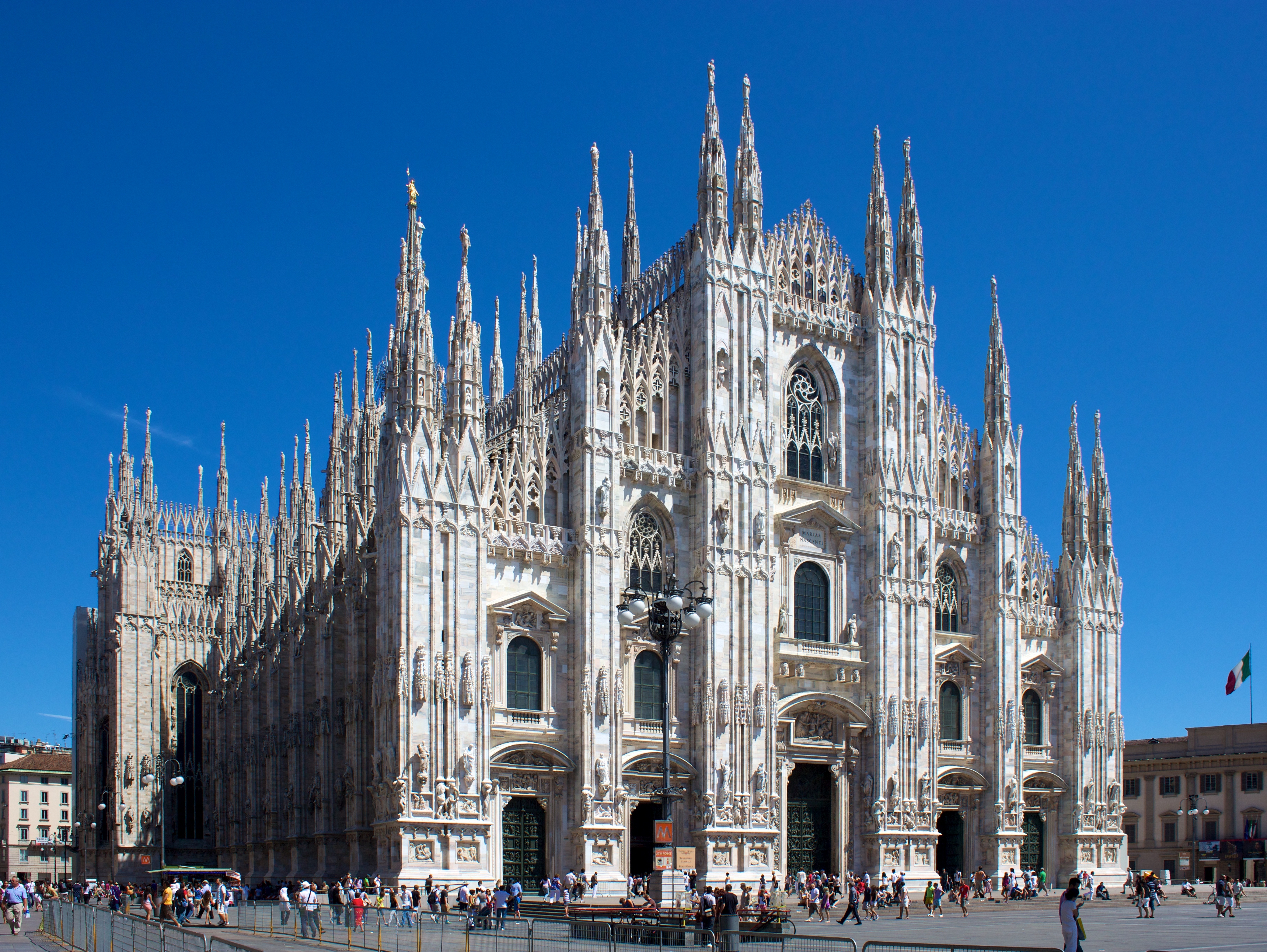
Milan's Duomo below ..... in case you were wondering !
File:Milan Cathedral from Piazza del Duomo.jpg
Source: Wikipedia


Pakistan visual arts never had a better year than 2013


By Artwallaa


Artwallaa believes that since the sixties, Pakistan visual arts never had a better year than 2013.

 
"Labyrinth of Reflections: The Art of Rashid Rana 1992 - 2012" is the best exhibition put up in Pakistan in the past decade (and perhaps one of the most under-marketed too). Source: Mohatta Palace.

The year started with the landmark retrospective of Rashid Rana at the Mohatta Palace. It is easily by far the best ever contemporary artists' exhibition put up in Pakistan (the only other coming close to this was Sadequain's Holy Sinner exhibited at the same venue in 2002.


Source: Mohatta Palace

The contrast in the venue and the art displayed couldn't be starker. Mohatta Palace is as old world as it gets; architecture/façade inspired by the stone palaces of Rajhistan, hand-dyed tiles, teak wood windows and multiples domes. The exhibition Mohatta Plalace is holding, Labyrinth of Reflections: The Art of Rashid Rana 1992 - 2012, is as cutting edge and contemporary as it could be. 


Source: Mohatta Palace

2013 nonetheless belongs to Imran Qureshi who was chosen for The Artist of the Year award by Deutsche Bank for 2013; an award which is awarded to an artist every year on a global basis and by a very prestigious group of international curators.


Photo

Mr Qureshi became not only the first Pakistan but also Asian to receive this award. The artist has never looked back since this announcement in the fourth quarter of 2012 and had been chosen for the Roof Top Commission at the Metropolitan Museum of Art (The Met) in New York (which was independent of the Deutsche Bank award), a separate paintings exhibition at The Met and making it into several 'who is who' lists of international artists.
Photo: Photography by Hyla Skopitz, The Photograph Studio, The Metropolitan Museum of Art. Copyright 2013
Source: The Met


Other Pakistani artists who continued to make their presence felt on the global scene included Shazia Sikander and Aisha Khalid. Also, the size of the group of artists following the above four established artists continues to grow in 2013. Artists who made significant progress in spreading their wings beyond Pakistan include Khadim Ali, Adeel Zafar, Fahd Burki, Basir Mehmood, Atif Khan, Saira Wasim, Noor Ali, Faiza Butt, Waqas Khan and Risham Syed and many more.


Important year-to-date 2013 Pakistan Visual art events at the global level:

January:
  • Rashid Rana Retrospective at the Mohatta Palace, Karachi - By far the best exhibition put up in Pakistan for any contemporary Pakistani artist and comparable to Sadequain's 'Holy Sinner' exhibited at the same venue in 2002.
February:
  • Imran Qureshi - Deutsche Artist of the Year 2013 - Announcement, celebration and exhibition at the NCA. First Pakistan and Asian to be chosen for this award.
  • Naiza Khan's solo exhibition, "Karachi Elegies" opens at the Eli and Edythe Broad Art Museum, Michigan.
March:
  • 2013 saw a resurgence of Pakistani artists' participation in Art Dubai, after a couple of years's nominal presence. Amongst the participants were Shahzia Sikander with her super-sized video installation at the Sharjah Biennial, Aisha Khalid whose artwork is believed to be picked up by a Saudi royalty, Fahd Burki who received the John Jones Art on Paper Award at the Fair and Basir Mehmood.
April:
  • Imran Qureshi's Solo exhibition opens at the Kunstahalle in Berlin - as part of the Deutsche Artist of the Year activities. The exhibition opening night was attended by over 1000 people and there were reportedly queues ouside the museum in central Berlin. The exhibition which included Qureshi's new as well as old works, was accompanied by a very comprehensive monograph of the artists encompassing the entire body of his work.
  • Waqas Khan of NCA got short-listed for this year's Jameel Prize.
May:
  • Imran Qureshi becomes the first Asian chosen for the Roof Top Commission at the Metropolitan Museum of Art, NYC.
  • Art Basel Hong Kong had the largest ever representation of Pakistani artists in the Fair's history. Artists exhibiting at the Fair included Shahzia Sikander, Aisha Khalid, Addel Zafar, Imran Qureshi, Risham Syed, Atif Khan, Shezad Dawood, Faiza Butt, Khadim Ali and Imran Channa.
  • Venice Biennale opened in which Imran Qureshi's works were part of the Main Pavillion at the Arsenale and Faiza Butt's works were exhibited at a satellite event.
June:
  • Imran Qureshi makes it into the Art+Auction's prestigious 50 Under 50: The Next Most Collectible Artists list for 2013. The magazine publishes its widely followed list in the middle of year and this is the first time that a Pakistani artist has made it to the list. Qureshi is also the only locally based artist from the sub-continent to make it to the list. Other artists with subcontinent connections are the London based Idris Khan and Raqib Shaw.
July:
  • Imran Qureshi makes the list of 'The Most Important Artists of 2013 (so far)'. Mr Qureshi's inclusion brought himself and Pakistan right in the middle of the truly global contemporary artists. The list includes - Jean-Michel Basquiat, James Turrell, JR, Ai Weiwei, Paul McCarthy, Keith Haring, Jeff Koons, Donald Judd, Tino Sehgal, KAWS, Richard Mosse, Imran Qureshi, FAILE, Marina Abramovic, Barbara Kruger, Tom Friedman, Tracey Emin, El Anatsui, James Franco, Takashi Murakami, Marc Quinn, Kenny Scharf and Brian Eno. 
  • Imran Qureshi's exhibition of miniature paintings opens at The Metropolitan Museum of Art in New York.
August:


September:

October
  •  
The Frieze 2013 and Pakistan: The Frieze Art Fair had a good representation of Pakistan artists including the likes of Imran Qureshi, Aisha Khalid, Shahzia Sikander to younger artists like Waqas Khan and Mehreen Mustaza.
November
December

A decade from now, 2013 will surely be seen as a watershed year in Pakistan's visual art history. I hope you enjoyed these developments in 2013 as much as Artwallaa did !


Your 'feeling very proud'

Artwallaa

-------------------------------------

PS: To know more on why Artwallaa believes that the Pakistan visual art scene is in an irreversible upward pattern, read the following articles:
Bloomberg article on Pakistan art - stereotyped, shallow but ......
A Proud Milestone for Pakistan & Asian Art

PPS: If you think that our list above has missed out on any important Pakistani visual art development, then please do share with us. The more the merrier.


Saturday, January 4, 2014

4 Pakistani artists making art out of violence

Source: artradarjournal.com

Over the last ten years, Pakistan has suffered the most violent decade of its history. Now the country’s contemporary artists are challenging the devastation through their art.


Faced with a devastatingly violent socio-political environment, Pakistani artists are not only documenting the nation’s suffering, but also questioning the role of art in their country. Art Radar brings you four artists who have positioned themselves on the frontline of Pakistan’s violence.

Imran Qureshi, "Roof Garden Commission" (2013) at the Metropolitan Museum of Art, New York. Image courtesy Art Observed.
Imran Qureshi, “The Roof Garden Commission” (2013) at the Metropolitan Museum of Art, New York. Image courtesy Art Observed.

The past decade has been the most violent period in Pakistan’s already tumultuous history. The landscape has been splattered with the bloodshed caused by sectarian violence between Sunni and Shia Muslims, the post 9/11 War on Terrorism and the prevalence of extremist Islamic militants.
The condition of the nation has imbued the consciousness of its citizens and it is duly reflected in Pakistan’s art. A new wave of artists has gathered strength, all of whom delve into the problematised politics of Pakistan to create works that not only document the violence, but also attempt to subvert, question and challenge it.
Bani Abidi, 'Security Barrier Type A - Iranian Embassy, Shahrah-e-Iran, Clifton, Karachi', 2008, inkjet print, 28 x 44 cm. Image courtesy the artist.
Bani Abidi, ‘Security Barrier Type A – Iranian Embassy, Shahrah-e-Iran, Clifton, Karachi’, 2008, inkjet print, 28 x 44 cm. Image courtesy the artist.

History teaches us of the brutalising effects of violence, but with the rise of the internet and concomitant visual media saturation, it is possible that violent imagery may lose its potency. Karachi-based sculptor Durriya Kazi explains:
We watch Baghdad before, during and after its destruction and are embedded with journalists in the battlefields, the battle comes right into our homes through the screen or the newspaper. I am sure there are many like myself who are drowning or suffocating in the excess of these images.
In the age of visual excess, where it is so easy to become apathetic to the violence and loss of humanity, artists are reconsidering the way they respond to atrocities in their work. The following Pakistani artists are at the forefront of responding to violence. They create artworks that “engage with questions behind the entire machinery of terror, draw attention obliquely to realities of everyday life in the face of terror and thereby present creative responses,” according to artist Asma Mundrawala.

Rashid Rana, 'Red Carpet 1', 
2007, C-print on DIASEC, 241.3 x 317.5 cm, 
edition 1/5. 
Collection of Pallak Seth
Image. Image courtesy Gallery Chemould and Chattertjee & Lal, Mumbai.
Rashid Rana, ‘Red Carpet-1′, 
2007, C-print on DIASEC, 241.3 x 317.5 cm, 
edition 1/5. 
Collection of Pallak Seth
Image. Image courtesy Gallery Chemould and Chattertjee & Lal, Mumbai.

Imran Qureshi
Based in Lahore, Imran Qureshi formally trained in miniature painting at the National College of Arts. From his initial practice in miniature painting techniques to site specific installations on the rooftop of New York’s Metropolitan Museum of Art, Qureshi has seen a lot of international exposure in recent years. He was awarded Deutsche Bank’s “Artist of the Year” in 2013 and has exhibited at Museo d’Arte Contemporanea Roma, Rome and Deutsche Bank Kunsthalle, Berlin.
Qureshi juxtaposes old Islamic forms of art against a contemporary context and thus makes his work relevant from an international standpoint. According to Deutsche Bank Kunsthalle’s press release,
In Qureshi’s work, an investigation into ornamentation is both a reference to tradition and a vehicle for criticism: of constricting role models, violent political and religious systems, stereotypes, and conventions. His art delves into the constant alternation between violence and hope, destruction and creation, and calls for peaceful resistance and optimism in difficult times.
Bani Abidi, 'Security Barrier Type B - Near the American Consulate, Abdullah Haroon Rd, Karachi', 2008, inkjet print, 28 x 44 cm. Image courtesy the artist.
Bani Abidi, ‘Security Barrier Type B – Near the American Consulate, Abdullah Haroon Rd, Karachi’, 2008, inkjet print, 28 x 44 cm. Image courtesy the artist.

Qureshi has made red acrylic his weapon of choice, powerfully using the colour to depict the bloodshed caused by violence. In his “Roof Garden Commission”, on view from 14 May to 3 November 2013 at the Metropolitan Museum of Art, Qureshi has extended this blood red motif into intricately painted foliage patterns.
Although undoubtedly bloody, Qureshi’s red works also symbolise something more positive:
These forms stem from the effects of violence. They are mingled with the colour of blood, but, at the same time, this is where a dialogue with life, with new beginnings and fresh hope, starts.
Abdullah M. I. Syed, 'Rug of Drones', 2011, installation from "The Rising Tide" at Mohatta Palace Museum. Image courtesy the artist and Al Jazeera.
Abdullah M. I. Syed, ‘Rug of Drones’, 2011, installation from “The Rising Tide” at Mohatta Palace Museum. Image courtesy the artist and Al Jazeera.

Abdullah M. I. Syed
Karachi-born Abdullah Syed is a mixed media artist whose work is full of political expression and innate symbolism. His work has been exhibited internationally in Bangladesh, Sharjah, the United States, Hong Kong, the United Kingdom, India, New Zealand, Australia and Pakistan. Syed divides his time between living and working in his hometown and Sydney.
In the exhibition “The Rising Tide: New Direction in Art From Pakistan 1990-2010“, Syed’s installation Flying Rug of Drones features an overhanging assembly of drones constructed out of the blades of box cutters. These drones are the most discernible symbol of the war on terror, extensively employed by the American army to fire missiles at militants in Pakistan’s tribal zones. Commenting on these attacks Syed said, “Although in the West the drones are often seen as an essential element in the fight against terrorism, in Pakistan they are considered imperial interference by the United States.”

Since 2004 more than 1000 civilians have been killed and wounded by drone attacks. This has lead to a sharp rise in the influx of civilians from tribal areas into urban cities, which has further increased the political tension within the country. According to Syed, “Flying Rug of Drones is a work that ‘aesthetically’ and perhaps ‘poetically’ talks about the history of destruction, menace of war and a wish to be free.”
Bani Abidi, 'Security Barrier Type G - Traffic Police, Karachi', 2008, inkjet print, 28 x 44 cm. Image courtesy the artist.
Bani Abidi, ‘Security Barrier Type G – Traffic Police, Karachi’, 2008, inkjet print, 28 x 44 cm. Image courtesy the artist.

Bani Abidi
Bani Abidi, born in 1971, is a Karachi-based contemporary artist whose video works have garnered much international acclaim. A graduate from the School of the Art Institute of Chicago, Abidi’s video works have been exhibited at Baltic Centre for Contemporary Art, Whitechapel Art Gallery, dOCUMENTA (13) and the Tenth Lyon Biennale amongst many others. Abidi lives and works in Karachi and Delhi.

The interplay between the refuge of private space versus the violence-ridden public spaces in Pakistan is a recurring theme in Abidi’s work. Drawing from a biographical reality of working between two countries which share a conflicted history, her work Security Barriers A-L (2008) feature twelve prints depicting the cameras that monitor borders. According to The Global Contemporary, “Abidi employs temporary architectural elements for an analysis of political manifestations of state violence, the maintenance of state power, and national strategies of demarcation.

In her video works one of the most noticeable features is Abidi’s creation of fictional characters in order to vocalise her apprehensions towards socio-political concerns. At dOCUMENTA (13), she displayed the video work entitled Death at a 30 Degree Angle, which featured a fictionalised politician and his utter confusion at which stance to adopt for his portrait statue.

Bani Abidi, 'Death at a 30 Degree Angle', 2012, installation view at Documenta 13, double channel video installation. Photo © Jörg Zimmermann, Stylepark. Image courtesy Jörg Zimmermann, Stylepark.
Bani Abidi, ‘Death at a 30 Degree Angle’, 2012, installation view at dOCUMENTA (13), double channel video installation. Photo © Jörg Zimmermann, Stylepark. Image courtesy Jörg Zimmermann, Stylepark.

Rashid Rana
Rashid Rana is perhaps Pakistan’s most prominent contemporary artist. Born in Lahore, the artist graduated from Massachusetts College of Art in Boston. Since then, Rana has embraced a multitude of media ranging from video performance to photo mosaics. His work has been internationally exhibited in institutions such as Whitechapel Gallery, Saatchi Gallery and Singapore Art Museum.
According to the Queensland Art Gallery | Gallery of Modern Art website,
Fascinated by how meaning is often misunderstood in our media-oriented society, Rana’s photographic practice creates images that offer a different view of how popular ideas and stereotypes are created. His art investigates the representation of reality, as well as the politics of gender, violence and authenticity in the age of global communication.
Rashid Rana, 'Red Carpet 1', 
2007
, C-print on DIASEC
, 241.3 x 317.5 cm, edition 1/5. Collection of Pallak Seth
Image. Image courtesy of Gallery Chemould and Chattertjee & Lal, Mumbai.
Rashid Rana, ‘Red Carpet-1′, 
2007
, C-print on DIASEC
, 241.3 x 317.5 cm, edition 1/5. Collection of Pallak Seth
Image. Image courtesy of Gallery Chemould and Chattertjee & Lal, Mumbai.

Rana is renowned for his composite images, which explore the dualities between violence and our desensitised attitudes towards it. From afar these works appear to be one large image, but on closer inspection multiple pixel-like images reveal themselves.
Red Carpet-1 (2007) is one such work, stirred by the untimely assassination of the Pakistani Prime Minister Benazir Bhutto. At first glance the work appears to depict a traditional Pakistani carpet, but a closer look reveals that the work is actually made up of images of brutal animal slaughter. One edition of Red Carpet-1 became the highest selling artwork by a Pakistani artist at the Sotheby’s New York May 2008 auction, selling for a record price of USD623,000.
Ambika Rajgopal