Saturday, August 24, 2013

Everything is Illuminated - An Interview with Shahzia Sikander

Source: Art Mag

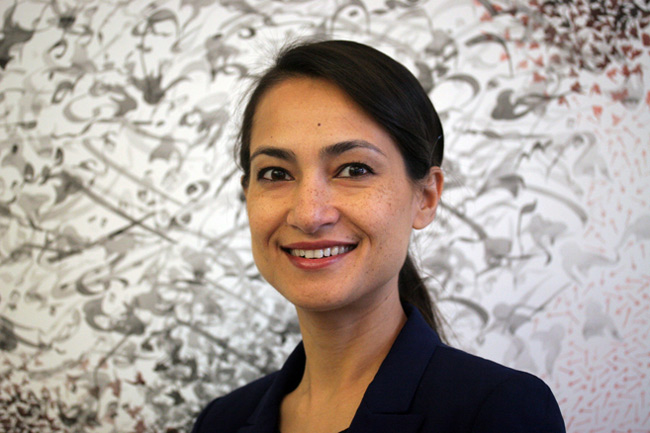
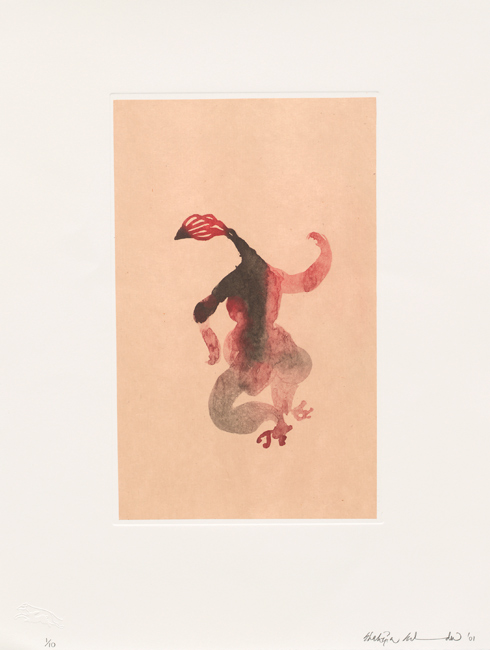
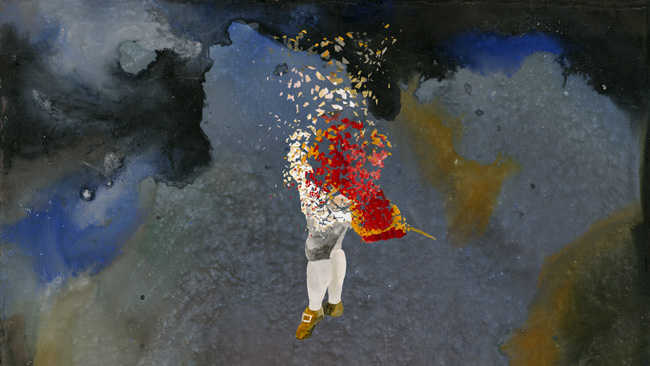
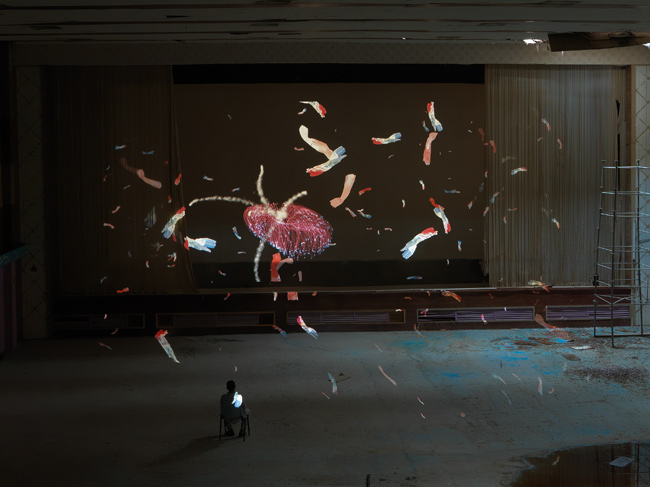
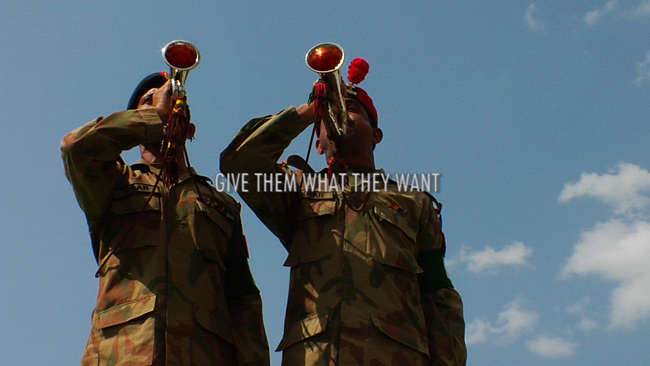
Shahzia Sikander, like Deutsche Bank’s “Artist of the Year” 2013, Imran Qureshi, belongs to a generation of Pakistani artists who have radically renewed centuries-old miniature painting. Sikander, who is represented in the Deutsche Bank Collection, mixes traditional motifs with various cultural references and transfers her collages to different media, from wall painting to animation video. Cheryl Kaplan met with the artist, who recently received the „U.S. Department of State - Medal of Arts“ from Hillary Clinton, in New York for an exclusive interview.


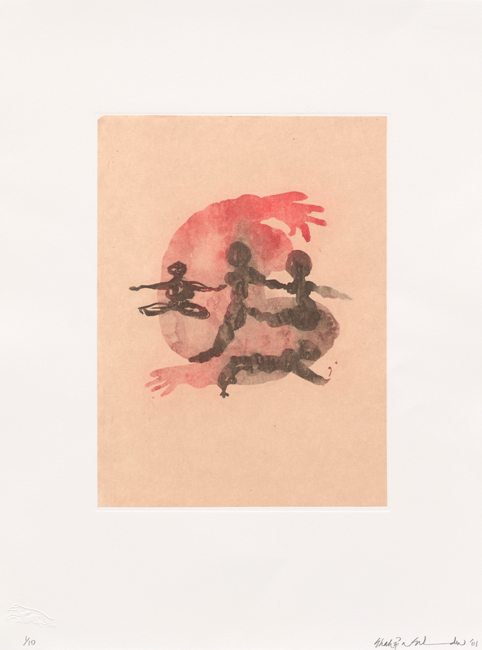
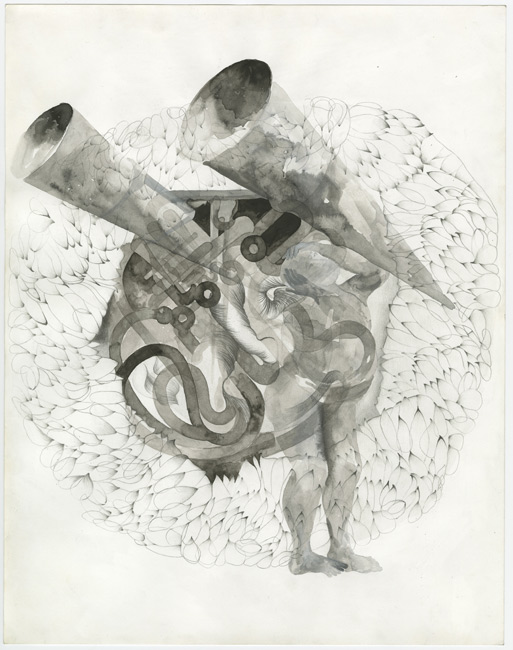
In Shahzia Sikander’s Big Dog Series, headless robotic dogs, fashioned after U.S. military drones in Afghanistan, chase wildly through the legs of a Sumo wrestler. Lifting a cow with his bare hands, the wrestler looks back at a plump goddess wielding a megaphone. This trumped up version of a classic hunt or battle scene, so familiar to us from paintings by Rubens and Delacroix or Persian miniature painting, is just one example of how Sikander conjoins the often separate worlds of East and West.

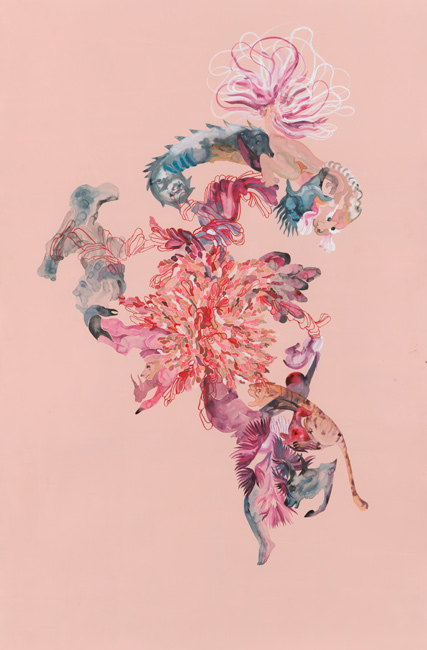
Her exquisitely rendered gouache drawings, paintings, animated films and projections are built in rich, luminous layers, a technique she first learned from miniature painting which she mastered at the National College of Art in Lahore, Pakistan. Also Imran Qureshi, Deutsche Bank’s “Artist of the Year” 2013, studied at the NCA. Sikander grew up during the oppressive military regime of Muhammad Zia-ul-Haq in the 1970s and 1980s and speaks several languages, including Urdu, English, Punjabi and Arabic.

Cataclysmic events are the lifeblood of Sikander’s visual language, and yet, there is great humor in her work. At times, her odd-ball use of allegory and vaudevillian drama turn history into a quixotic narrative. But narrative is not her stopping point. As I learned from the artist in her Midtown New York studio, what she’s most “interested in is how flux can open the dialogue between cultural and political boundaries.”

Sikander’s paintings and animated films have been exhibited internationally at the Venice Biennale; Museum of Modern Art, NY and the Whitney Biennial. Against the far window in her studio, a small leather box is stacked on top of books. Inside is the „U.S. Department of State - Medal of Arts“, recently presented to Shahzia Sikander by Hillary Clinton.
.
Cheryl Kaplan: When did you make your first miniature paintings?

Shahzia Sikander: In 1988, I majored in miniature painting at the National College of Art in Pakistan. I was the only person in the department and studied with Bashir Ahmed. I was also interested in the conceptual miniature painter Zahoor ul Akhlaq. [Akhlaq, a Civil Rights activist and his daughter, a well-known classical dancer, were murdered in 1999.] I was curious about what miniature painting represented as a complicated craft-based residue of the English Colonial period of the school and region and its relation to tourism as well as its lack of a continuous critical history.

Why doesn’t the term miniature painting explain your practice?


My desire was to analyze miniature painting critically and not just make miniature paintings. I don’t know why I’ve been defined by the context of miniature painting. Maybe it’s an identity-based premise and categorization. I see it as two distinct stages. Starting in the mid-80s, I had a decade engagement with miniature painting, looking at ways to open up its discussion, not just in terms of a painterly approach, but through its scholarship.

And your second decade?

It’s the outcome of [my] progression as an artist that involved a distancing from miniature painting that was a natural outcome of my progression and growth as an artist.
 
Miniature painting has become part of your “hand” or language as a painter, but you’ve also transformed into a system of thinking.  


My work is really about painting and thinking simultaneously and less about making works related to a genre.  I’m interested in that distance between a point of origin and one’s current relationship to it; it fascinates me. Is it important to define what you’re looking at or doing with what you reference? There’s a whole myth around tradition, but how do you define tradition? Who makes tradition come into being only at a certain point in history? When you study how miniature painting has been understood and written about in art history, those definitions can be quite stale.

Your work is incredibly lively, playful and luminous. I’m reminded of the diffuse paintings of Blake or Turner or Tiepolo where the viewer’s focus is constantly being moved about the canvas through interplays of light and composition. Your work contains a similar meandering and turbulence with shifting levels of luminosity. Your characters rarely stay put as they switch into their next role or iteration. In the animated projection "Nemesis" (2002) a strange creature starts out as a composite of many animals: a tiger, deer and bull and then suddenly a human figure appears in the mix only to encounter three winged devils. These creatures try to co-exist, but can’t.

That’s a good way to understand the work. Regarding luminosity, early on I was looking at Bonnard and Vuillard. While I learned about color and light through miniature painting it was less about iconography and narrative and more about using materials to create space and dimension through light. From the beginning I was attracted to the abstract aspects of miniatures.

A common assumption is that you work from Hindu mythology, Persian tales, and personal experience. Is this true?

No. I haven’t worked with Persian tales or Hindu mythology, that’s a myth. I’m not interested in narrative based content that accompanies a lot of miniature painting. I was interested in the miniature image for its formal structure. It’s an incredible puzzle. I want to analyze it, to look at how color and line function.

Today there are many younger artists in Pakistan who work with miniature painting, for example Imran Qureshi, Deutsche Bank’s "Artist of the Year" 2013.

I influenced a lot of Pakistani artists and witnessed this explosion after me in miniature painting. I had a following of students. Miniature painters are now successful in biennials everywhere. Imran also worked with Bashir. When I left, Imran started teaching. In the last decade, artists who did miniature painting got support locally. Now there are powerful collectors investing in art in South Asia, India and Pakistan. This is generating a new structure and culture that’s the best thing that’s happened in terms of news about Pakistan.

In what way does being a Muslim woman in the USA from Pakistan describe you or not?

If you asked that question in early 2000, I was passionate about the frustrations. There was a time when I was deeply upset about having my work understood in that context and then I stopped being upset. Maybe I have more distance now, but I could care less about what it is to be a Muslim woman in the USA. Ten years ago, I had a closer relationship to my own history. It’s a complex topic in terms of contemporary work coming out of South Asia, the Mid-East, Latin countries, Europe and North America. I’m just back from a meeting in Switzerland where I’m part of the Master Jury for the Aga Khan Award for Architecture 2013 that represents a diverse Muslim community. I grew up Muslim, going to a Catholic school in Pakistan. But, this has nothing to do with my work. My work doesn’t deal with religion. The diversity and histories of the Muslim experience is so much about its plurality. This has always been ignored.

Sunday, August 18, 2013

Mob vandalises Pakistan-India art exhibition in Ahmedabad, India

Saturday, August 17, 2013

Art+Auction's : 50 Under 50: The Next Most Collectible Artists - Imran Qureshi

Imran Qureshi makes it into the Art+Auction's prestigious 50 Under 50: The Next Most Collectible Artists list for 2013. The magazine publishes its widely followed list in the middle of the year and this is the first time that a Pakistani artist has made it to the list. Qureshi is also the only locally based artist from the sub-continent to make it to the list. Other artists with subcontinent connections are the London based Idris Khan and Raqib Shaw.


50 Under 50, Part 2
Source: blouinartinfo.com

Art+Auction June 2013
"Last year we set out on what some might call a fool’s errand by selecting the 50 most collectible living artists. Hoping to elevate this sort of list-making beyond a parlor game, we defined the parameters and embarked on research to find those artists who have a proven record in the market and also show promise of the continuing innovation and devotion to craft that will warrant attention for decades to come. The result was a list that peered beyond the headlines. A year is no time at all in the long game that is serious collecting. For this second outing we decided to add to the challenge by focusing on artists under the age of 50. For such a group, auction stats can be erratic, and artists may just be adding a major museum solo to their exhibition history.
 

Friday, August 16, 2013

Paradoxical Protagonists - Adeel Zafar in Singapore

 
by Durriya Dohadwala (Source: Artitude)
 
 
Fost Gallery’s new show opened on Friday night in the beautiful location of Gillman Barracks. Titled Protagonists, it is a solo show by Pakistani artist Adeel uz Zafar and features 17 artworks. The exhibition will run till 01 September 2013 and is well worth a visit.
 
Adeel, who trained at Pakistan’s prestigious National College of Arts in Lahore, uses the laborious technique of etching to construct large scale images of well known childhood characters on a surface not commonly used in this field. Vinyl or what we commonly know of as linoleum is the base for his work which is layered in black acrylic to make it sensitive to his mark making. Using a variety of tools like scissors, cutters and knives to score into the vinyl, he meticulously crafts his protagonists. Once made, each mark is permanent- the only way to rectify being to cover and manipulate the lines further. His subjects are familiar childhood objects in the shape of plush soft toys which he buys from a popular Sunday Bazaar in Karachi. Magnified many times over, Adeel’s heroes are wrapped in gauze bandages, sometimes tight and constrictive while at other times loose and breaking free. The folds of the bandages are beautifully rendered, gouged into the vinyl sometimes lightly and sometime deeply to create depth on a two dimensional surface.
 
Adeel Uz Zafar, Protagonist (Kong and Godzilla) diptych, 2013, Engraved drawing on vinyl, 40.64 x 30.48 cm (LR)gAdeel Uz Zafar, Protagonist (Kong and Godzilla) diptych, 2013, Engraved drawing on vinyl, 35.6 x 30.48 cm (LR)k

Wednesday, August 7, 2013

Miniature Paintings Exhibition opens at The Met - Imran Qureshi


Qureshi continues to create new milestones for Pakistan artists with his miniatures exhibition in Gallery 916 of The Met (the first by a Pakistani artist). His contemporary miniatures are juxtaposed with the traditional old miniatures from the Museum's collection. Another must see exhibition !


The Roof Garden Commission: Imran Qureshi's Miniature Paintings            
July 29, 2013–February 2, 2014
Gallery 916 (Source: The Met, NY)
 
The Roof Garden Commission: Imran Qureshi's Miniature Paintings


"This installation pairs works on paper by Imran Qureshi (born 1972, Hyderabad, Pakistan) with historic miniatures from the Museum's collection. It is presented to complement the artist's painted commission on the Iris and B. Gerald Cantor Roof Garden.

The exquisitely detailed paintings by the artists who worked for the Mughal emperors (1526–1857) and other courts on the Indian subcontinent inspired these miniatures. At Lahore's National College of Arts (NCA), Qureshi studied the rigorous techniques of this tradition, which range from gilding and hand crafting the thickly plied, carefully burnished paper supports to the careful application of color with tiny handmade brushes of squirrel fur. As assistant professor in miniatures at NCA, Qureshi now teaches this practice to a new generation of students.

Qureshi continues to find room to experiment within the well-defined strictures of this traditional discipline. In works of the early 2000s, he layered the pages of old textbooks found at a flea market with drawings of scissors or plantlike forms. In more recent examples, such as his ongoing series Moderate Enlightenment, detailed portraits of friends and family in contemporary dress are set in sumptuously gilded landscapes, replete with the meticulous detail found in folios commissioned by the Mughal emperors. For Qureshi, there is an exquisite tension between the stringent parameters of this ancient practice and the modernity of his sitters—one that speaks, in part, to the frictions of a world in which novelty and orthodoxy collide."

Related Exhibition: The Roof Garden Commission: Imran Qureshi (on view May 14–November 3, 2013)


Related Events

Gallery Talk: Gallery Conversation—Miniature Paintings
September 14, 2013 | Free with Museum admission
Free Lecture: Imran Qureshi: Tradition and Reinvention in Contemporary Miniature Painting
September 15, 2013 | Free with Museum admission
 

Tuesday, August 6, 2013

Landscape of the Heart - Atif Khan in the UK

9th August to 14th September @ Ceri Richards Gallery, Taliesin Arts Centre

A very broad range of Atif's works exhibited. Worth going to.

Click here for more details


Conference of the Birds, 2013


Friday, July 19, 2013

Shahzia Sikander @ Beyond Belief: 100 Years of the Spiritual in Modern Art

Source: The CJM website

Highlights from SFMOMA's collection

On view through October 27, 2013

Beyond Belief is an expansive exhibition exploring the spiritual dimensions of modern art, especially as seen through the lens of Jewish theological concepts. The exhibition features forty-eight internationally-known artists whose work—painting, sculpture, photography, video, and installation art—are all drawn from SFMOMA’s outstanding collection. Ranging from a 1914 abstraction by Dutch artist Piet Mondrian to a luminous 1960 abstraction by Mark Rothko and oversized prayer beads by contemporary artist Zarina, Beyond Belief provides an engaging alternative that prioritizes spirituality in the reading of art.

The Limitations of  Legibility
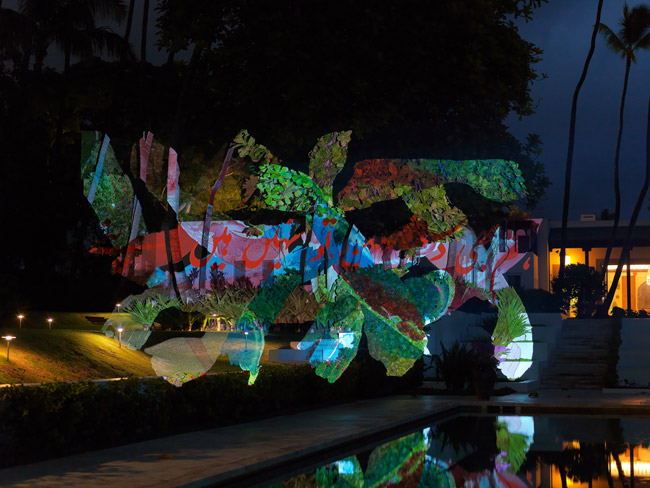
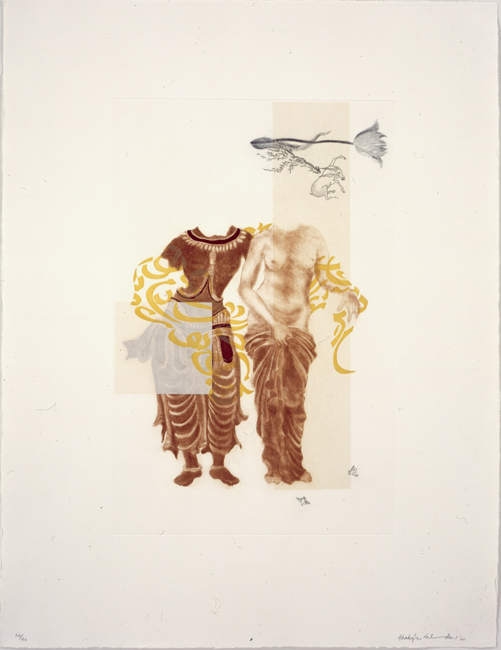
For Shahzia Sikander, who grew up listening to the Koran but unable to read it in Arabic, the presence of letters was both an invocation of the holy and a reminder of the limitations of language. In her rendering of verses from the Laotian epic Sang Sinxay, a sixteenth- and seventeenth-century poem based on classical Buddhist literature, the legibility of the letters becomes less important than the dynamic presence they invoke.
 
 
Shahzia Sikander

..... read more

Thursday, July 18, 2013

Pre-Party on the Roof of The Met

Benefit Event

The Post Pride VIP Reception


Visitors on the Iris and B. Gerald Cantor Roof Garden
Another great view of Imran's installation at The MET  (Source: The Met website)
 
Monday, July 22, 5:30–7:30 p.m.
The Iris and B. Gerald Cantor Roof Garden Show location on map
Director Thomas P. Campbell invites you to join special guest Tony Kushner, Pulitzer Prize–winning playwright and screenwriter, along with Met staff and Museum friends for a private VIP pre-party and viewing of The Roof Garden Commission: Imran Qureshi. Your pre-party ticket includes cocktails, hors d'oeuvres, pre-registration to the Museum's annual LGBT Post Pride Party, and exclusive viewings of special exhibitions PUNK: Chaos to Couture and Photography and the American Civil War. Membership is required to purchase tickets.

Friday, July 12, 2013

The Most Important Artists of 2013 (So Far) - Imran Qureshi


Source: Complex Art+Design website

Imran Qureshi is picked as one of the most important artists of 2013 !

click here to read the entire article


The Most Important Artists of 2013 (So Far)


12. Imran Qureshi

Exhibitions: "Roof Garden Installation by Imran Qureshi" at the Metropolitan Museum of Art (May 14 - November 3, 2013), "Imran Qureshi: Artist of the Year 2013" at KunstHalle (April 18 - August 4, 2013, "The Encyclopedic Palace" at the Venice Biennale 2013 (The Italian Pavilion)

Imran Qureshi began 2013 with an award from the Deutsche Bank for Artist of the Year, giving him the opportunity to fill the gallery space of their main Berlin location with whatever he chose. He created custom pieces in the space for the exhibition, including a separate, dark walkthrough space with various staircases leading to his trademark small paintings under minimal light. One room in particular has a mound of crumpled, "blood"-splattered tissue paper, providing the uncomfortable feeling that many of Qureshi's bloody works tend to.

He created a similar installation for the Italian Pavilion at the Venice Biennale, but the real showstopper is his piece on the Met's rooftop for the summer, where one can really experience the flowery, blood-covered floor, and by simply attending, voluntarily interact with it. Qureshi's commentary on humanity's history of violence, done on both the scale of his miniature paintings and his large, rounder works and installations, remains relevant and has spoken volumes in 2013. -Cedar Pasori

Thursday, July 4, 2013

Seher Shah @ The Drawing Centre, NY

Source: http://thebottomline.drawingcenter.org           

Viewing Program artist Seher Shah’s architectural drawings are both fantastical and factual. Her drawings are complicated studies of real architectural spaces with multiple perspectival renderings of the structures. On a recent studio visit we talked about her influences and thoughts on the failed idealism of particular Modernist buildings.

Seher mentioned that her drawings use external references in combination with internal, more emotive systems of representation.  In order to better understand the internal/external play in her drawings I proposed that we investigate this idea in her recent work, Object Repetition, recently installed at the Jones Center in Austin, Texas. Object Repetition is a new direction for Seher.

It is composed of identically reductive geometric forms, which reference both buildings and monuments. The work feels like a three dimensional drawing. I wanted to get at the aspects of her work which are difficult to communicate, her associations with emotions and time. We loosely worked out a sequence of images that would provide a flexible interpretation of Seher’s work and perhaps reveal the internal object anxiety that interests her.

Below is a series of images of both the finished work and Seher’s conceptual source material, which offers a vantage into its intuitive and textural nuances.

 –Lisa Sigal, Viewing Program Curator


Seher Shah, Constructed Landscapes, Object Repetition. 1000 cast hydrocal objects with ink, dimensions variable. Installation at Amoa Arthouse in Austin, Texas, April–June 2013. Image courtesy of the artist.


Seher Shah, Constructed Landscapes, Object Repetition. 1000 cast hydrocal objects with ink, dimensions variable. Installation at Amoa Arthouse in Austin, Texas, April–June 2013. Image courtesy of the artist.


Seher Shah, Object Repetition. 480 cast hydrocal objects with ink, dimensions variable. Installed at Headlands Center Residence in San Francisco, California, 2010.