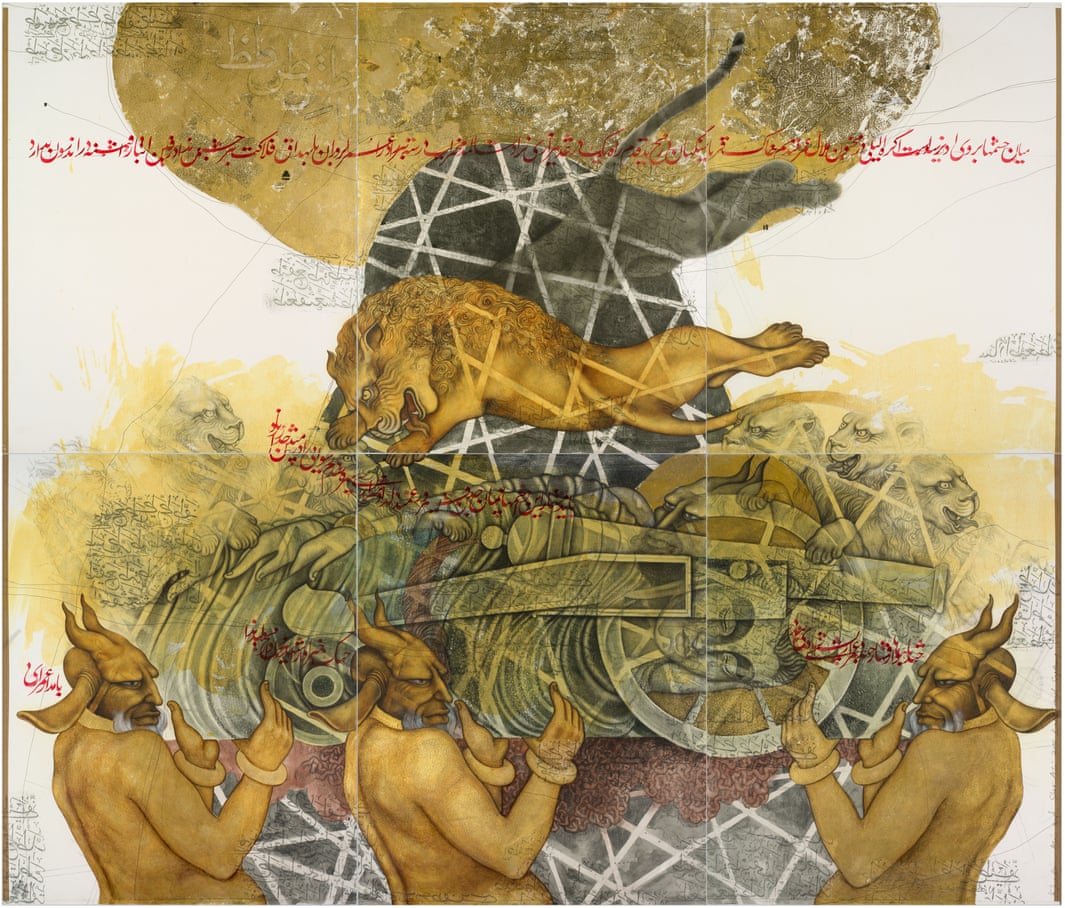
For Artwallaa, Parallax is one of the most powerful works of art coming out of Pakistan in the recent past. It is being shown in Delhi at the Kiran Nadir Art Museum.
Go experience it!

Source: Honolulu Museum
Shahzia Sikander
"Pakistani-American contemporary artist Shahzia Sikander’s Parallax is an experience in itself. Originally created for the 2013 Sharjah Biennale, and borne out of her road trip through UAE, this large video installation consists of hundreds of watercolor, gouache and ink paintings, with traditional Indo-Persian miniatures, all interwoven with drawing and animation into a three-channel immersive artwork. The haunting music score is specially done by Chinese composer Du Yun who mixes new poetic compositions in classical and colloquial Arabic by three contemporary Sharjah poets. The result is a tense, eerie slow-burn sound art which features many ant-like creatures on video. The power tensions surrounding the Strait of Hormuz, the world's most important transit chokepoint for crude oil exports in the Middle East, is the more immediate inspiration behind the breathtaking Parallax".
Source: The Week
Delirium in a techno-dystopic maze: Kiran Nadar Museum's latest exhibit
By Sneha Bhura August 21, 2018 21:14 IST
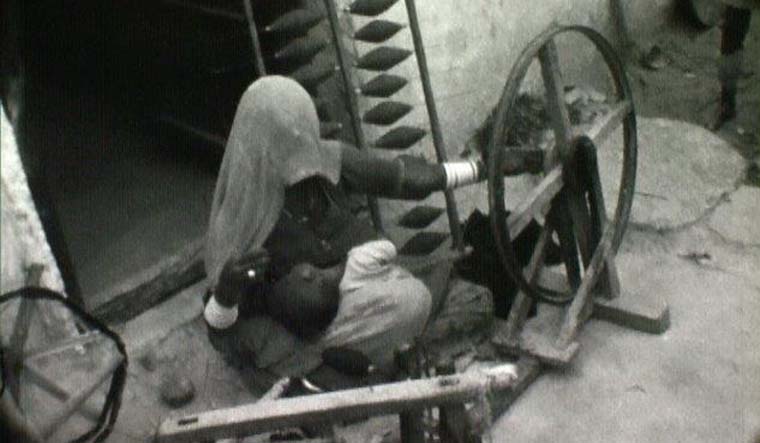
A scene from Nalini Malani's 1973 Taboo, at Kiran Nadar Museum of Art
When you enter Kiran Nadar Museum of Art's latest exhibition, Delirium/Equilibrium, on video, film and kinetic artworks from the museum’s collection, prepare to be besieged by a sense of uncertainty and displacement. Bukowski's book title Tales of Ordinary Madness might flash through your mind's eye—not because the show recreates wild and weird stories from a city's dark underbelly, but because it feels like an apt description to simplify a group of bewildering works which play on light, sound, shadow, noise and speech/moving objects, images and gibberish. The result is a strange, funny, complex techno-dystopic maze stretching into the inner reaches of a dark and semi-dark gallery. The experience can only be equated to wandering lost and confused in a cavernous hideout, but persisting all the same for the many fascinating finds its many nooks and crevices hold.
As curator Roobina Karode explains in her note, "The world today is disenchanting and distraught, yet alluring and demanding, desiring poise and equilibrium." The show wants to respond to our collective drive towards "mechanisation, technology and and scientific knowledge", and the need to construct new architectonic forms in a “rewiring of the world”. But could this assemblage of disconcerting animation works, mechanised objects, echoing speeches of leaders and quiet, determined acts of resistance as performance, also speak to the dizzying political and social climate of absurd priorities and cacophonous disinformation? Or is this the future trajectory of art, when new media will more prominently collaborate, intervene and upstage in an age of post-human development? With another mainstream gallery (Nature Morte) in Delhi already hosting a show on art and artificial intelligence, this merits some contemplation.
As curator Roobina Karode explains in her note, "The world today is disenchanting and distraught, yet alluring and demanding, desiring poise and equilibrium." The show wants to respond to our collective drive towards "mechanisation, technology and and scientific knowledge", and the need to construct new architectonic forms in a “rewiring of the world”. But could this assemblage of disconcerting animation works, mechanised objects, echoing speeches of leaders and quiet, determined acts of resistance as performance, also speak to the dizzying political and social climate of absurd priorities and cacophonous disinformation? Or is this the future trajectory of art, when new media will more prominently collaborate, intervene and upstage in an age of post-human development? With another mainstream gallery (Nature Morte) in Delhi already hosting a show on art and artificial intelligence, this merits some contemplation.






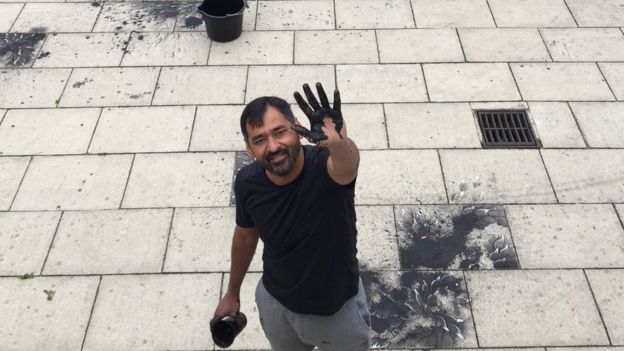
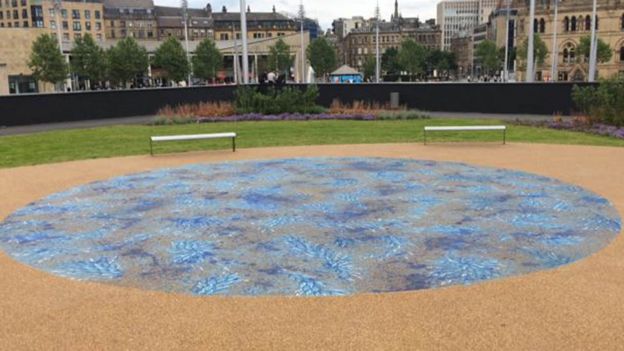
 Abdullah M.I. Syed and his work The Portrait of Azra. Picture: Mim Stirling